
“8StarSports has the news on that. We keep the record of it.”
Miles Corso keeps the ledger — 162 games of sample, kept like accounts. Sal Marchetti trusts the eye — thirty years from the rail. The argument is the product.
The World Series is set, and for the first time in a long time it comes with a guarantee: somebody is winning it for the first time.
The Tampa Bay Rays finished the job Monday night at Tropicana Field in St. Petersburg, beating the Cleveland Guardians 7-3 in Game 6 of the American League Championship Series to take the pennant, four games to two. The Milwaukee Brewers, who swept the Los Angeles Dodgers in the National League Championship Series and have been waiting since Thursday, host Game 1 on Friday, October 23, at American Family Field. First pitch is 8 p.m. ET.
Neither franchise has ever won a World Series. Tampa Bay has been twice before and lost both — to Philadelphia in 2008 and to the Dodgers in 2020. Milwaukee has been once, in 1982, when the Brewers were still an American League club, and lost to St. Louis in seven. It is the first World Series since 1980, when Philadelphia met Kansas City, in which both clubs arrive with zero championships.
Freddy Peralta was named the ALCS Most Valuable Player, and the story writes itself from there. Peralta spent the first eight years of his career in Milwaukee. He was traded to the New York Mets in the offseason, struggled there, and was dealt to Tampa Bay at the trade deadline. On Monday he took a shutout into the sixth inning, allowing one earned run on five hits over 5⅓ innings, with three strikeouts and three walks. He won Games 2 and 6 of the series and took two important outs in relief in Game 4. His next start comes against the club that raised him.
Cleveland actually led this series two games to one. Tampa Bay won three straight to close it, and the clincher followed the pattern of the whole run. Richie Palacios doubled home two runs in the second inning. Jonny DeLuca added a sacrifice fly in the third. Junior Caminero, quiet for much of the series, drove a two-run home run off the left-field foul pole in the seventh against Cleveland closer Cade Smith. The Guardians pulled to 5-3 in the eighth and loaded the bases, but Kevin Kelly struck out Brayan Rocchio to end the threat, and Yandy Díaz answered with a two-run home run in the bottom of the inning to restore the margin for good.
"They played defense better than us, they hit better than us, they pitched better than us," Cleveland's Steven Kwan said afterward. "We didn't beat ourselves, we got beat."
The Brewers won 103 games in the regular season, the most in baseball, and they have had a week to line up their pitching while Tampa Bay finished its work. Milwaukee's reward for the best record in the game is home field, and the series opens in front of a crowd that has waited 44 years to see its team back in this round.
Two clubs built on finding players other teams undervalued, playing for the first championship in either history. The ledger closes next week. One of these fan bases stops waiting.
From the rail, that is the only promise October ever keeps — and this year, it keeps it for somebody new.

The most durable line in the Yankees' ledger is not on the roster. It is in the front office, and it just got extended.
Brian Cashman told reporters on Wednesday, sitting alongside managing partner Hal Steinbrenner on the club's end-of-season video conference, that he has agreed to a new contract to remain New York's general manager, with the final details still being ironed out. "We're locked and loaded," Cashman said. TSN reported the agreement as a two-year extension.
Cashman has held the job since 1998 — the longest-serving general manager in Yankees history and the longest-tenured front-office leader in the game. His most recent contract ran from 2023 through this season. The 2027 season will be his 30th in the chair.
The credit column is real, and it is long. The Yankees have posted a winning record in each of Cashman's 29 seasons as general manager. They have won four World Series championships and 15 American League East titles on his watch.
The debit column is the one the Bronx reads first. The last of those four titles came in 2009, against Philadelphia. New York's streak of 13 straight playoff appearances without a World Series title is tied for the fourth-longest in postseason history, and the 2026 entry followed the recent pattern: the Yankees took the top American League wild card, beat Boston in the wild-card round, and were swept in the Division Series by Tampa Bay — the second straight year they went out in the divisional round to the club that went on to win the pennant. Against the Rays they scored five runs in three games, and were shut out in Game 1 while Drew Rasmussen carried a no-hitter into the eighth inning.
Steinbrenner declined to put any of that on his general manager or his manager. "I don't think you can pin the season and the unacceptable end to it on Aaron [Boone]," he said. "I don't think you can pin it on [Brian Cashman]." The owner pointed instead at an offense that ranked 25th in scoring across June, July and August after Aaron Judge went down at the end of May.
Manager Aaron Boone will return in 2027 for a 10th season as manager, though Steinbrenner said he has not discussed an extension with Boone. So the Yankees go into the winter with the same owner, the same general manager and the same manager who produced a third straight 90-win season and a second straight October exit in the same round.
That is the bet the extension actually records. The roster questions waiting for Cashman are not small: closer David Bednar and second baseman Jazz Chisholm Jr. are free agents and qualifying-offer candidates; the rotation's core — Gerrit Cole, Carlos Rodón and Max Fried — is in its mid-30s, with Clarke Schmidt entering his age-31 season; and the health of Judge, who pushed to return from a calf injury in the postseason and never made it back, and Giancarlo Stanton, who missed almost the entire regular season with lower-leg issues before appearing in the playoffs, has to be sorted before the lineup can be drawn honestly.
Twenty-nine seasons of winning records bought Cashman the right to answer those questions himself. The ledger now asks the only question it has asked since 2009, and it will ask it of the same man for a 30th year: when does the next title go in the book?
The Angels hired Kurt Suzuki on October 21, 2025. They let him go on October 21, 2026. The whole managerial tenure fits, almost to the hour, inside a single year — and the ledger it leaves behind is the worst in franchise history.
The club announced Wednesday that it has declined the option in Suzuki's contract for the 2027 season and, in coordination with Kroenke Sports & Entertainment, will search for a new manager and coaching staff. Suzuki has been offered a chance to remain with the organization as a special assistant — the same title he held from 2023 to 2025 — though the club did not say whether he has accepted it.
Suzuki's only season ended 62-100: a franchise record for losses, the first 100-loss season the Angels have ever posted, the worst record in the American League and the second-worst in the majors. It was his first year managing a team at any level, taken on a one-year contract — an unusually short deal that told its own story from the day it was signed.
Interim general manager John Mozeliak, in the club's statement, went out of his way to separate the man from the record. "Kurt has earned tremendous respect in our clubhouse, and I've seen firsthand how much he cares about our players," Mozeliak said. "I do not believe our record this year was a true reflection of his abilities as a manager. I'm pleased we were able to offer Kurt a role to stay on as a special assistant, where his knowledge of our players and his perspective would continue to be valuable to the organization."
Mozeliak also thanked the coaching staff for "their professionalism and hard work throughout a very difficult season," and said some members of the staff have been offered other positions in the organization.
Suzuki was hand-picked by general manager Perry Minasian, who was fired in June. Mozeliak arrived on an interim basis and moved veterans out more aggressively. Then longtime owner Arte Moreno agreed to sell the team to Stan Kroenke. By Wednesday's announcement, the general manager who hired Suzuki was gone, the owner who approved the hire was on his way out, and the one-year contract had no constituency left to defend it.
That is the Anaheim pattern, and it predates Suzuki. He joins Brad Ausmus, who managed the club in 2019, as a one-season Angels manager — this at a ballpark a short drive from Cal State Fullerton, where Suzuki won a College World Series in 2004 before a 16-year major-league catching career that brought a World Series ring with Washington in 2019 and ended, fittingly, with two final seasons in an Angels uniform in 2021 and 2022.
The Angels' job is now the third managerial opening in the American League West's orbit, alongside Seattle — already searching for Dan Wilson's successor — and Houston, which chose not to bring back Joe Espada. Whoever takes the Anaheim job inherits the same questions Suzuki never got a second season to answer, under a new owner, with an interim general manager running the search.
One year, 100 losses, and a polite offer to stay in the building in a different chair. The Angels' books will record Suzuki's season as the worst they have ever had. Mozeliak's own statement records the other half of it: nobody in that clubhouse believed the record was the manager.

The Milwaukee Brewers won more games this year than anybody in baseball — 103 of them — and on Friday night they get home-field advantage in a World Series for the second time in franchise history. The first was 1982. They were in the American League then, and they lost to St. Louis in seven. The wait is 44 years, and the opponent waiting in Milwaukee is a club that has never won anything either.
That much you know. What follows is how they got here, who they are, and where a Tampa Bay club that has beaten them before might actually get at them.
The Brewers took San Diego in four in the Division Series — 3-2, 4-3, a 4-3 loss at Petco, then a 3-1 clincher — and no team led by more than two runs at any point in the whole series. The Elias Sports Bureau called it only the second postseason series of at least three games in which that was true, and the first since the 1915 World Series.
Then came the rematch nobody saw coming. Los Angeles had swept them in the NLCS a year earlier. Milwaukee returned the favor, with interest: 2-1, 7-4, 6-2, and a 6-4 Game 4 in which they fell behind 4-0 in the second inning on Shohei Ohtani's first homer of the postseason and still came back to win all four games. Garrett Mitchell's go-ahead homer in the sixth, David Hamilton's ninth-inning insurance shot off Edwin Díaz, Aaron Ashby getting the final nine outs — a three-inning save in an elimination game, the first since Lance McCullers Jr. in the 2017 ALCS — and 22-year-old Jackson Chourio squeezing the last out at Dodger Stadium. Per the Associated Press, no club had ever completed a postseason sweep the year after being swept by the same opponent.
The postseason ledger reads 7-1. The one defeat was a road game in San Diego they were never out of. The reward for that run: a full week off before Friday while Tampa Bay was finishing off Cleveland on Monday night.
Start with the arm. Jacob Misiorowski gets Game 1 on Friday night at American Family Field, and the regular-season line is the line: 16-5, a 1.80 ERA, the NL Cy Young favorite. The desk's own preview noted the 104.8 miles per hour — the fastest tracked pitch in postseason history.
Here is the soft spot in the same paragraph: October has not gone smoothly for the ace. Three earned runs in 8.1 innings across two postseason starts, with 11 strikeouts and four walks — and he has not escaped the fifth inning in either start. The Brewers won both games anyway. That is the thesis of this team in one pitcher.
The projection behind him — and it is projection, nothing is announced past Friday — lines up Logan Henderson for Game 2 and Robert Gasser for Game 3, with a bullpen game in Game 4 where Pat Murphy has used Shane Drohan as an opener and can reach for Dustin May, who already logged high-leverage relief this month. Brendan Woodruff, on the injured list all season, faced live hitters on Tuesday, per SI — the one open roster question.
What covers for the short starts is the best-supported bullpen in the tournament. Trevor Megill closes. Abner Uribe set up a full inning in the NLDS clincher before Megill was perfect in the ninth. Aaron Ashby has pitched multiple shutout innings on the biggest nights of the club's modern history — three hitless frames to close out San Diego in Game 4 of the NLDS, then the nine-out finish in Los Angeles. DL Hall, JoJo Romero, Antonio Senzatela, Chad Patrick and Kyle Harrison give Murphy eight ways to get to the ninth. In the NLCS, this bullpen never let a Dodgers rally reach the dock.
Christian Yelich is the designated hitter, the longest-tenured Brewer on the field, and the voice in the room — it was his "stay together, start chipping away" that the dugout carried into the Game 4 comeback. The everyday nine around him, from the clinching lineup: Jackson Chourio in left, Brice Turang at second, William Contreras behind the plate, Jake Bauers at first, Garrett Mitchell in center, Cooper Pratt at short, Sal Frelick in right, and David Hamilton at third. Andrew Vaughn, Joey Ortiz and Luis Lara are the bench; Gary Sánchez backs up Contreras.
It is not a star-driven offense. Contreras and Frelick drew the walks that built innings against the Dodgers, Bauers delivered the two-run double that started the Game 4 comeback, Mitchell — who hit just four regular-season home runs — went deep twice in the clincher's neighborhood, and Hamilton, the No. 9 hitter with four regular-season homers, padded the lead off one of the era's great closers. They score by the handful of ways, which is why they have scored enough against everyone.
The week off cuts both ways — rest for the arms, rust for the bats, and Murphy has to set a roster for a best-of-seven without a live look at Woodruff. The starters have not gone deep all month; Misiorowski's eight-inning October total is the flag on the pole. If Tampa Bay's at-bats extend, this becomes a bullpen series, and the bullpen, for all its brilliance, has carried a heavy load through eight games already.
And there is the April file. These clubs met once this year, in Milwaukee in early April, and Tampa Bay took one of the three. In the rubber game, Drew Rasmussen — Tampa Bay's Game 1 starter Friday, per the probable listings — went five innings and allowed two runs, one earned, on three hits; Misiorowski answered with six innings, two runs, four hits, seven strikeouts and two walks. Small sample, cold weather, a lifetime ago. Still: the Rays have seen this fastball before, and they did not blink.
The Associated Press noted one more thing about this matchup: only six times in the wild-card era has the World Series matched the best regular-season record in each league. This is one of them. Milwaukee ranked 19th in payroll as of August 31. Tampa Bay ranked 25th. The two cheapest ways to win 200 games, and now somebody's first.
Friday, 8 p.m. ET, American Family Field, on FOX. The Brewers are home, they are rested, and they have the best record in baseball. For 44 years that is the sentence this town has been waiting to write.
The World Series opens Friday night in Milwaukee, and it opens with a guarantee: Tampa Bay or Milwaukee wins a championship for the first time in franchise history. It is the first Series since 1980 in which both clubs arrive with zero titles. The desk has built the full preview — the guarantee, the two roads here, Freddy Peralta against the club that raised him, three keys for each side, and the desk's pick — on a page of its own.
Read the full World Series preview →
The short form: Tampa Bay closed out Cleveland in six, three straight wins after trailing the ALCS two games to one, behind series MVP Freddy Peralta. Milwaukee swept the defending back-to-back champion Dodgers, won 103 games, and has had a week to line up its pitching. The Brewers have named Jacob Misiorowski — 104.8 miles per hour, the fastest tracked pitch in postseason history — to start Game 1 on Friday, 8 p.m. ET on FOX. Tampa Bay had not announced its starter when this was filed.
The pick, the schedule, and the whole of it live on the preview page. Somebody's first. The desk will be on the rail for all of it.
The first entry in the World Series ledger is a subtraction. Tampa Bay had its ace available on regular rest for Game 1. The Rays are holding him back a day anyway.
Manager Kevin Cash announced Thursday, before the Rays worked out in Milwaukee, that right-hander Nick Martinez will start the World Series opener on Friday night at American Family Field, opposite Brewers ace Jacob Misiorowski. Drew Rasmussen, who pitched Sunday, was on regular rest for Friday. Cash chose the extra day over the ace.
"We prioritized Drew getting an extra day. We're trying to get the full pitch allotment out of him," Cash said. "He's had a pretty thick workload here. We've relied on him heavily. When Nick pitches, we win."
Rasmussen's October is the reason the hold is even a debate. In three postseason starts he has thrown 21 innings and allowed three runs — a 1.29 ERA — with 23 strikeouts against three walks, and Tampa Bay has won all three. He followed Martinez in the American League Championship Series with seven innings of four-hit ball to win Game 5 against Cleveland, and Freddy Peralta closed the series in Game 6.
That is the workload Cash is protecting. One extra day in October is not rest for its own sake; it is an attempt to get a full-strength Rasmussen later in a series that can run seven games, rather than a slightly diminished one in the opener.
Martinez, 36, is not a concession. The Miami native was an All-Star for the first time in his career this season, going 15-6 with a 3.10 ERA and a 1.094 WHIP across a career-high 31 starts and 180 innings, with 109 strikeouts and just 26 walks. His last start, in Game 4 of the ALCS, tied that series at two games apiece: five and a third innings, two hits, one run, three strikeouts. Friday will be his third start of this postseason and the first World Series appearance of his career.
He does it without Rasmussen's power. Martinez works off a low-90s fastball and lives on deception, the changeup playing off the heater, in his first year under Rays pitching coach Kyle Snyder. Against a Milwaukee lineup that has spent a week preparing for velocity — Misiorowski's side of this matchup is the power arm, the National League Cy Young favorite at 16-5 with a 1.80 ERA — Martinez changes the eye level of the whole evening.
"It fell on me, and my job is just to rack up as many outs as I can," Martinez said.
American Family Field hosts a World Series game for the first time. Milwaukee's last Fall Classic was in 1982, at County Stadium, and the Brewers have waited 44 years to get back. Tampa Bay is in its third World Series and, like Milwaukee, is chasing the first championship in franchise history — one of these clubs ends that wait in the next nine days.
Game 1 is Friday at 8 p.m. ET. The Rays have decided the series is long, and they are managing it that way from the first pitch: Martinez for the opener, a rested Rasmussen behind him, and a manager on record with the simplest entry in the book — when Nick pitches, we win.
Every Reds fan of a certain age can see the play without closing their eyes: Oakland, Game 4, one out left in a World Series nobody expected Cincinnati to win, and the foul ball drifting toward first base, where a hometown kid settled under it and squeezed the 1990 championship shut.
Todd Benzinger has died at 63. The Cincinnati Reds announced his passing on Thursday, and the news was confirmed independently by TSN, the Cincinnati Enquirer and WHIO. The Reds did not announce a cause of death.
"The Cincinnati Reds are saddened by the passing of former first baseman and 1990 World Series champion Todd Benzinger," the club said in its statement. "Todd will be remembered with great affection and gratitude for his place in one of the most memorable chapters in Reds history. Our deepest condolences go out to his family, friends, former teammates and all who knew and loved him."
Benzinger was born in Dayton, Kentucky, just across the river, and graduated from New Richmond High School in Ohio. Boston drafted him in 1981, and he reached the majors with the Red Sox in 1987 — but Cincinnati is where his career found its permanent address. He played parts of three seasons for the Reds, from 1989 to 1991, at Riverfront Stadium, the concrete bowl on the Ohio River that was the Reds' home from 1970 until Great American Ball Park replaced it in 2003.
The 1990 club went wire to wire in the National League West, then swept the heavily favoured Oakland Athletics in four games. Benzinger played in all four World Series games, started at first base in Games 3 and 4, contributed five hits during the Reds' postseason run, and caught the final out of the Series in foul territory near first base in Oakland — the last championship moment the franchise has known, 36 years on.
The full career line, as TSN records it: 924 games across nine big-league seasons with Boston, Cincinnati, Kansas City, the Los Angeles Dodgers and San Francisco, a .257 average in 2,856 at-bats, 733 hits, 66 home runs and 376 runs batted in. He retired after the 1995 season.
What followed is the part Cincinnati will feel most. Benzinger stayed. He managed the Dayton Dragons, the Reds' Class A affiliate, in 2009 and 2010; he coached girls' basketball at Loveland High School from 2006 to 2008; he showed up — Redsfest, the Reds Caravan, Fantasy Camp, Reds Hall of Fame events — year after year, a regular and, by the club's own account, a popular one. He judged costumes at the Reds Hall of Fame's "Hall"-o-ween celebration in 2025 and was scheduled to appear at this year's event on October 24. His son Grant played college basketball at Wright State.
"Todd stayed closely connected to the Reds, contributing his time and talent to the Reds Hall of Fame and Museum and the Reds Community Fund," the club said.
Players are usually remembered for a number or a moment. Benzinger had one moment, and it is about as good as a moment gets — the final out of a World Series, caught by a local kid for his local team. Cincinnati then got the rarer second act: he spent the rest of his life in the community that watched him catch it.
From the eye: the 1990 Reds were a wire-to-wire team built on pitching and nerve, and their last out landed in the glove of a first baseman from Dayton, Kentucky. That is not a footnote in Reds history. It is the final frame of it — and Benzinger never left the picture.
A World Series lineup card is a manager's first honest statement of the series, and Kevin Cash made his Friday afternoon at American Family Field: Tampa Bay will open against Jacob Misiorowski without the hottest bat it owns.
Richie Palacios, hitting .364 this postseason and the Rays' near-everyday second baseman since August, is not in the Game 1 lineup. Cash broke the club's second-base platoon for the opener, starting right-handed hitter Ben Williamson against Milwaukee's right-handed ace. Williamson is 1-for-8 in October and 0-for-3 in his career against Misiorowski — the platoon logic is on the card, the October form is not, and that tension is the whole decision.
Yandy Díaz leads off at designated hitter, Tampa Bay's best hitter this month at .308 with two home runs — and the man who took Misiorowski deep for a two-run homer on April 1 in this same ballpark. Jonathan Aranda follows at first base, with Chandler Simpson, who led the American League with 46 stolen bases, batting third in left field. Junior Caminero, who hit 42 home runs this season, cleans up at third base; he is 0-for-3 with two strikeouts in his career against Misiorowski.
The second choice worth circling is behind the plate. Liam Hicks starts at catcher over Nick Fortes, batting fifth, against a Brewers team that stole 162 bases this season. Runners went 58-for-69 against Hicks this year — Milwaukee will test that number early, and everyone in the building knows it. Jonny DeLuca in center field, Victor Mesa Jr. in right and Taylor Walls at shortstop round out the card in front of starter Nick Martinez, whose selection for Game 1 — Drew Rasmussen held back for the extra day — the Rays announced Thursday.
Pat Murphy's card leans the other way: no surprises withheld, just one shuffle. Jackson Chourio leads off in left field and Jake Bauers bats second at first base, with Christian Yelich in the No. 3 spot as the designated hitter and William Contreras catching Misiorowski and batting cleanup.
Brice Turang, a fixture in the second spot through Milwaukee's postseason run, slides down to fifth at second base with the right-hander Martinez on the mound. Garrett Mitchell starts in center field, Cooper Pratt at shortstop, Sal Frelick in right field and David Hamilton at third base.
Read together, the lineups are the series in miniature. Milwaukee, home for a World Series game for the first time at American Family Field — the Brewers' last Fall Classic was in 1982, at County Stadium, and the franchise has waited 44 years to get back — trusts the order that carried it here, with one platoon adjustment. Tampa Bay, in its third World Series and, like Milwaukee, chasing the first championship in franchise history, is managing matchups from the first pitch: a platoon break at second base, a running-game gamble behind the plate, and its ace saved for Game 2.
Game 1 is Friday at 8 p.m. ET in Milwaukee. The first pitches will argue with these cards soon enough — they always do — but the intent is now on record from both dugouts.
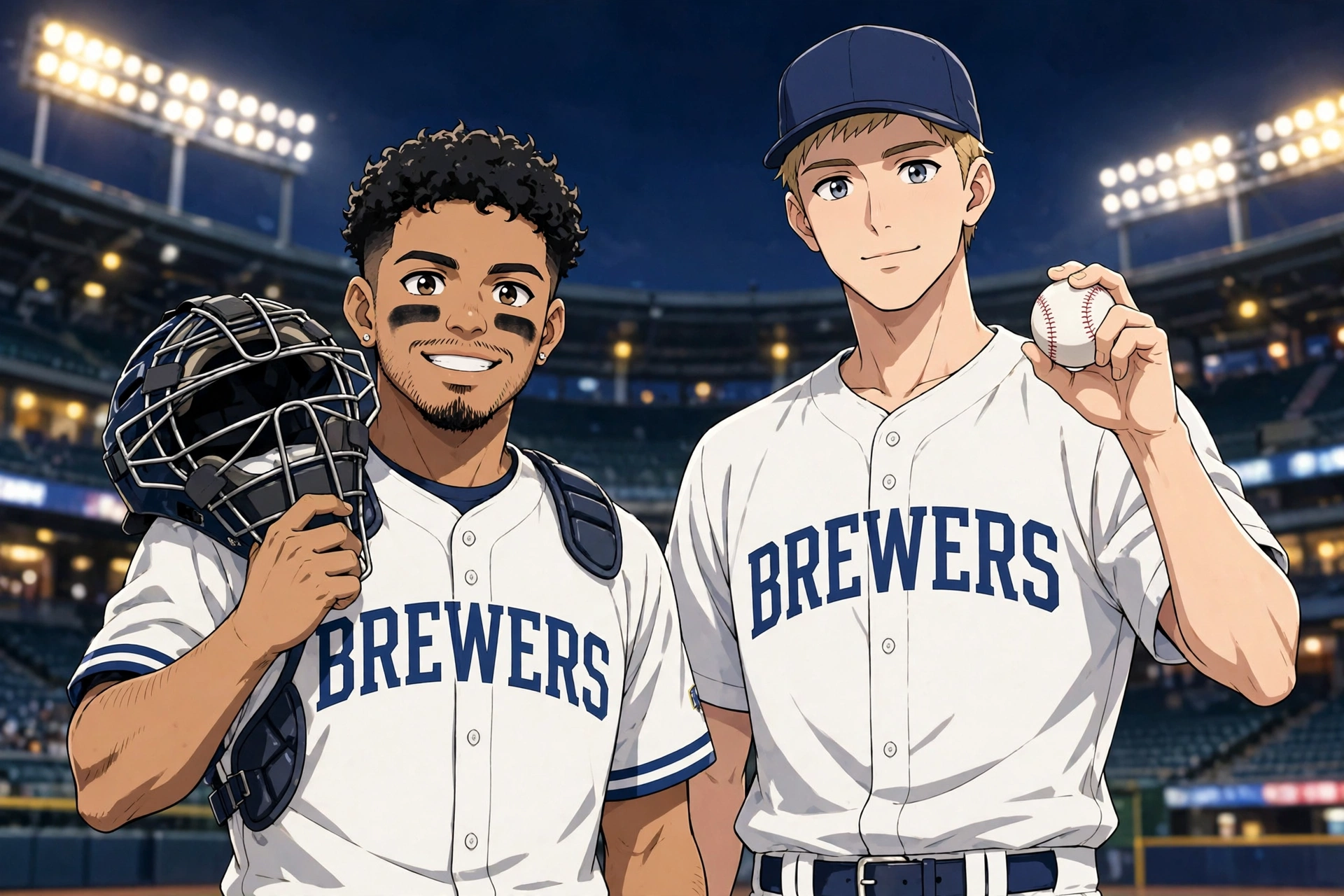
Milwaukee waited 44 years for a World Series game at home, and Game 1 at American Family Field refused to let the sellout crowd of 43,250 enjoy a quiet one. The Brewers beat the Tampa Bay Rays 3-2 on Friday night to take a 1-0 lead in the World Series — their first win in the Fall Classic since 1982, their sixth straight win this postseason — and they needed the last pitch of the night, with the tying run standing at third base, to get it.
Trevor Megill, who had loaded the bases with one out in the ninth, thought he had ended it one batter before he actually did. Liam Hicks grounded into what was ruled a game-ending double play, only for replay review to show that shortstop Cooper Pratt's right foot had come off second base as he took Brice Turang's throw. The out at first stood, a run scored to cut the lead to 3-2, and Tampa Bay had runners at second and third with two outs. Megill struck out Jonny DeLuca swinging, and the building exhaled.
The Brewers scored the game's first two runs before the first inning was old. Jackson Chourio led off with a single, Christian Yelich drove him in with an RBI triple to right-center that glanced off DeLuca's glove on a diving attempt, and William Contreras singled Yelich home one pitch later against Rays starter Nick Martinez, who was working with his infield drawn in.
That was all Martinez gave up. He went five innings, allowed two runs on five hits, walked nobody and struck out five — a holding action that kept Tampa Bay in a game it spent the rest of the night chasing by one swing.
Jacob Misiorowski opened the night with a 103.5 mph fastball to Yandy Díaz, the fastest pitch tracked in a World Series, and worked five innings of one-run ball to earn the win: four hits, one walk, three strikeouts, 78 pitches, in his longest start of this postseason. Tampa Bay's only run against him came in the fourth, when Junior Caminero doubled in a run off the glove of center fielder Garrett Mitchell, who had misjudged the ball.
Behind him, Contreras controlled everything else. The catcher had two hits, drove in Milwaukee's second run, won both of his ABS challenges, and threw out two Rays trying to steal — Victor Mesa Jr. at third base in the fifth, with Díaz at the plate, and Jonathan Aranda at second in the sixth on a strike-him-out, throw-him-out double play that ended the inning. Abner Uribe and Aaron Ashby carried the lead from there, Ashby retiring five straight to run his scoreless streak this postseason to 14 innings.
Chourio, who finished with two hits, supplied the run that wound up deciding it: a first-pitch RBI single in the seventh that scored Pratt, who had led off with an eight-pitch walk, and made it 3-1.
Both clubs are chasing the first championship in franchise history, and the Rays are now in a familiar hole — Tampa Bay has never won a Game 1 in its three trips to the World Series. Milwaukee, 8-1 this October, is three wins from a title.
Game 2 is Saturday at 8 p.m. ET at American Family Field, with Drew Rasmussen starting for the Rays against Logan Henderson for the Brewers.
From the rail: a 44-year wait does not get a calm ending, it gets a closer on the ropes, a foot off a base, and one last swing-and-miss. Milwaukee earned the wait and survived the ending — 1-0, and the ballpark gets to do it all again Saturday.
The last spot on Milwaukee's pitching staff was the only real question left before the World Series, and the Brewers answered it Friday with the name the whole building wanted to hear. Brandon Woodruff is on the 26-man roster for the Fall Classic, the club announced — three and a half months after he walked off a mound with a shoulder injury that was supposed to end his season.
Game 1 against the Tampa Bay Rays is Friday night at American Family Field in Milwaukee, first pitch 8 p.m. ET, with Jacob Misiorowski starting for the Brewers against Nick Martinez. Both clubs submitted their rosters Friday morning. Milwaukee's carries 13 pitchers and 13 position players, and Woodruff is the story of the 26.
Woodruff, 33, the Brewers' longest-tenured player and a two-time All-Star, last pitched on July 4, when a recurrence of his shoulder trouble drove him from a game against Arizona. Season-ending surgery was the initial plan. It was cancelled when the shoulder started improving, and by late August he was on a throwing program, throwing off a mound through each of Milwaukee's first two postseason series while his teammates played on without him.
Tuesday, at American Family Field, he faced live hitters for the first time — 23 pitches, five hitters, his fastball sitting at 90-92 mph. That was the whole audition, and it was enough.
"I thought he threw the ball really good," manager Pat Murphy said on Wednesday. "It's almost incredible that the kid has worked his way back. His mind was on this. He was very quiet about it, but his mind was on this."
Woodruff knew the arithmetic going in. "It went as good as it could have gone," he said Thursday. "And I've probably made their decision a little bit harder, which is a good problem for them. So, I'm lucky, I'm blessed. We got a chance to win the World Series and regardless of what happens, I will be just as excited to win if I'm on the roster or not."
This was not a sentimental rubber stamp, because the rules would not let it be one. A player on a postseason roster can only be replaced if he suffers an acute, non-chronic injury — and if Woodruff's shoulder goes again, the Brewers faced the real possibility that baseball would call it recurring and leave them a man short for the rest of the series. The club discussed the situation with the league and turned it over for days, with mixed opinions in the room as late as Wednesday's workout. Trust won: in Woodruff, in the 90-92 he showed Tuesday, and in what he has been for this franchise.
He takes the roster spot of right-hander Chad Patrick, who was carried through both previous rounds without throwing a postseason pitch after posting a 3.40 ERA over 106 innings this season. Milwaukee's hitting group is unchanged, and the bullpen he joins has already been worked hard — Trevor Megill, Abner Uribe and Aaron Ashby have combined for 18 appearances this postseason.
Tampa Bay made one change of its own, restoring left-hander Garrett Cleavinger in place of right-hander Brody Hopkins, and will carry 12 pitchers and 14 position players. The Rays' four-man rotation is entirely right-handed, which keeps the lefty-swinging Christian Yelich in the favourable side of Milwaukee's designated-hitter platoon with Andrew Vaughn for the two games in Wisconsin.
Milwaukee won 103 games, waited 44 years to get back to this round, and opens a series in which one of these two franchises wins its first championship. The Brewers will do it with the pitcher who has been theirs the longest standing in the bullpen, available — which, on July 4, nobody in that building would have dared to write down.
From the rail: rosters are usually bookkeeping. This one is a verdict — a club that could not replace him if he broke down looked at five live hitters, 23 pitches and a decade of trust, and decided the bet was worth it.
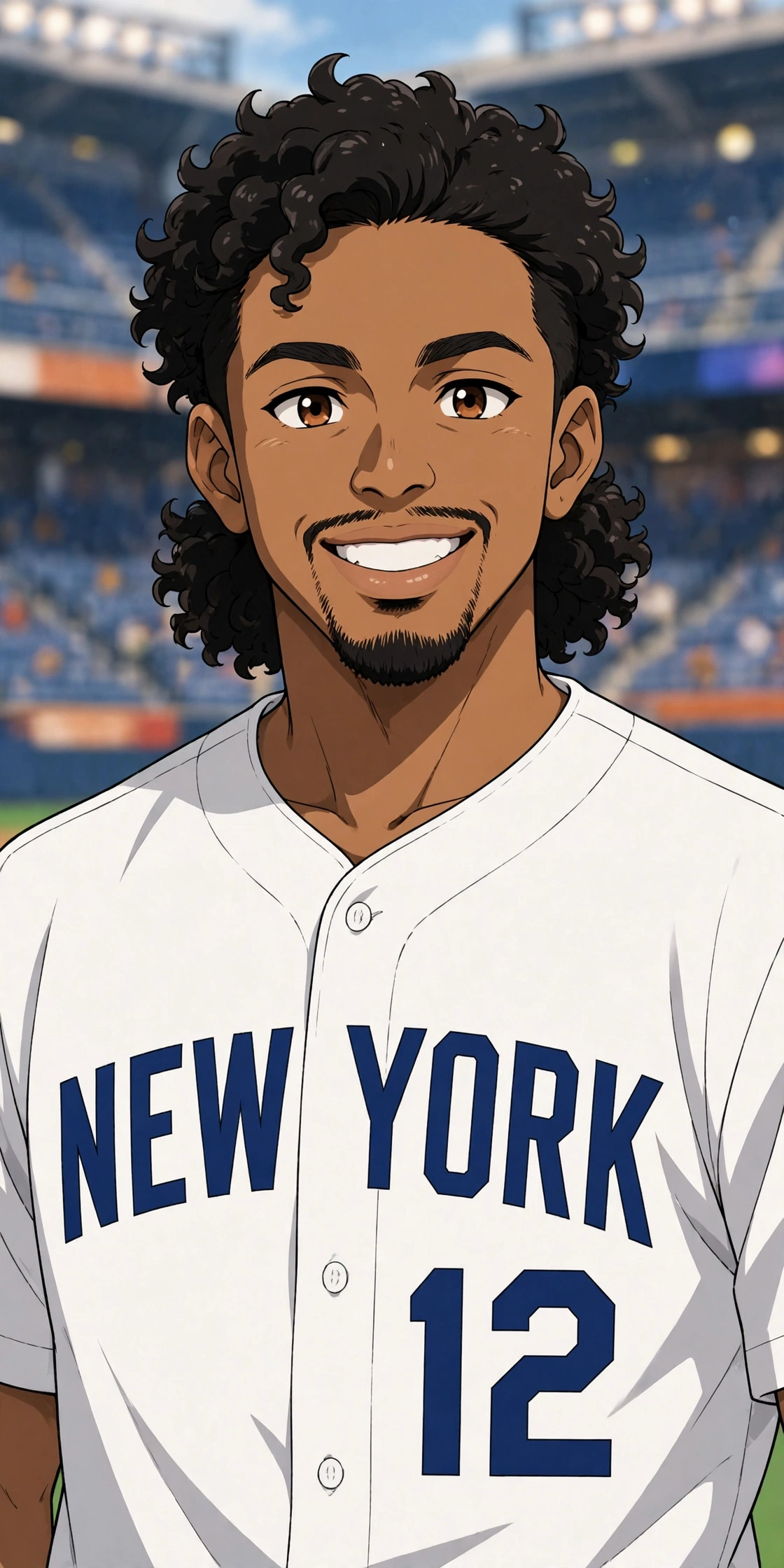
The most prestigious individual honor in baseball is not given for anything that happens between the lines, and on Monday it went to the player who has been building toward it in public for four years. Major League Baseball announced that New York Mets shortstop Francisco Lindor is the winner of the 2026 Roberto Clemente Award, presented by Capital One — the annual recognition of the player who best represents the game through extraordinary character, community involvement, philanthropy and positive contributions, on and off the field.
Lindor, 32, will be formally presented with the award tonight at Tropicana Field in St. Petersburg, before Game 3 of the World Series between the Milwaukee Brewers and the Tampa Bay Rays. It is the Rays' first World Series game in their domed home since 2008 — the 2020 appearance was played in a neutral-site bubble — and the pregame ceremony belongs to a player whose team is not in it, which is rather the point of this particular trophy.
"To me, this honor, this award, it's probably one of the most important awards in MLB, just because it's not about myself," Lindor said. "It's about my family, my parents, how much they have instilled in me to give and share the blessings that I have had. And to be part of a fraternity, a community of all the recipients that have won this award, guys like (Carlos) Delgado, (Carlos) Beltran, Edgar Martinez, guys that I grew up idolizing, the Molinas. There's so many big names that represented the game the right way on the field but off the field, they were even greater."
Lindor was the Mets' nominee for the fourth straight year, and was chosen from the 30 club nominees by a blue-ribbon panel together with the fan vote. The win puts him on two short lists at once.
He is the fifth player to win the award as a Met, joining Gary Carter (1989), Al Leiter (2000), Carlos Delgado (2006) and Curtis Granderson (2016). And he is the fifth recipient of Puerto Rican descent since the award's inception in 1971, joining Edgar Martinez (2004), Delgado (2006), Carlos Beltrán (2013) and Yadier Molina (2018) — a line that runs straight back to the man the award is named for, the Puerto Rican legend who died on New Year's Eve 1972 on a humanitarian flight to aid earthquake victims in Nicaragua.
For a native of Caguas, that lineage is the story. "Hopefully this inspires another generation to continue to care for others, continue to love your neighbors, continue to love, continue to give back," Lindor said. "Sometimes us athletes can be seen like we're so far away from the general public, but we're not. We are in the communities. We are giving back and we are helping. Hopefully this is going to give me a bigger platform to continue to help and create better opportunities for people back home."
Presenting sponsor Capital One will donate $100,000 to the SEEN Foundation in Lindor's honor — the nonprofit, which he and his wife Katia work with, supports families with children who have physical disabilities. It is the headline number on a longer ledger:
The on-field column is already familiar — five All-Star selections, four Silver Sluggers, two Gold Gloves. None of it is what this award measures, and Lindor has now been his club's nominee four years running precisely because the other column kept growing while nobody was keeping score.
From the ledger: every other award in this sport is a verdict on a season. This one is a verdict on a career spent in other people's neighborhoods — the school in Florida, the classrooms in Queens, the ballfields back home in Puerto Rico. Lindor spent four nominations building the entry. On Monday, baseball finally wrote it in his column, and tonight at the Trop it gets read out loud before a World Series game he isn't playing in. That is exactly how Clemente would have drawn it up.
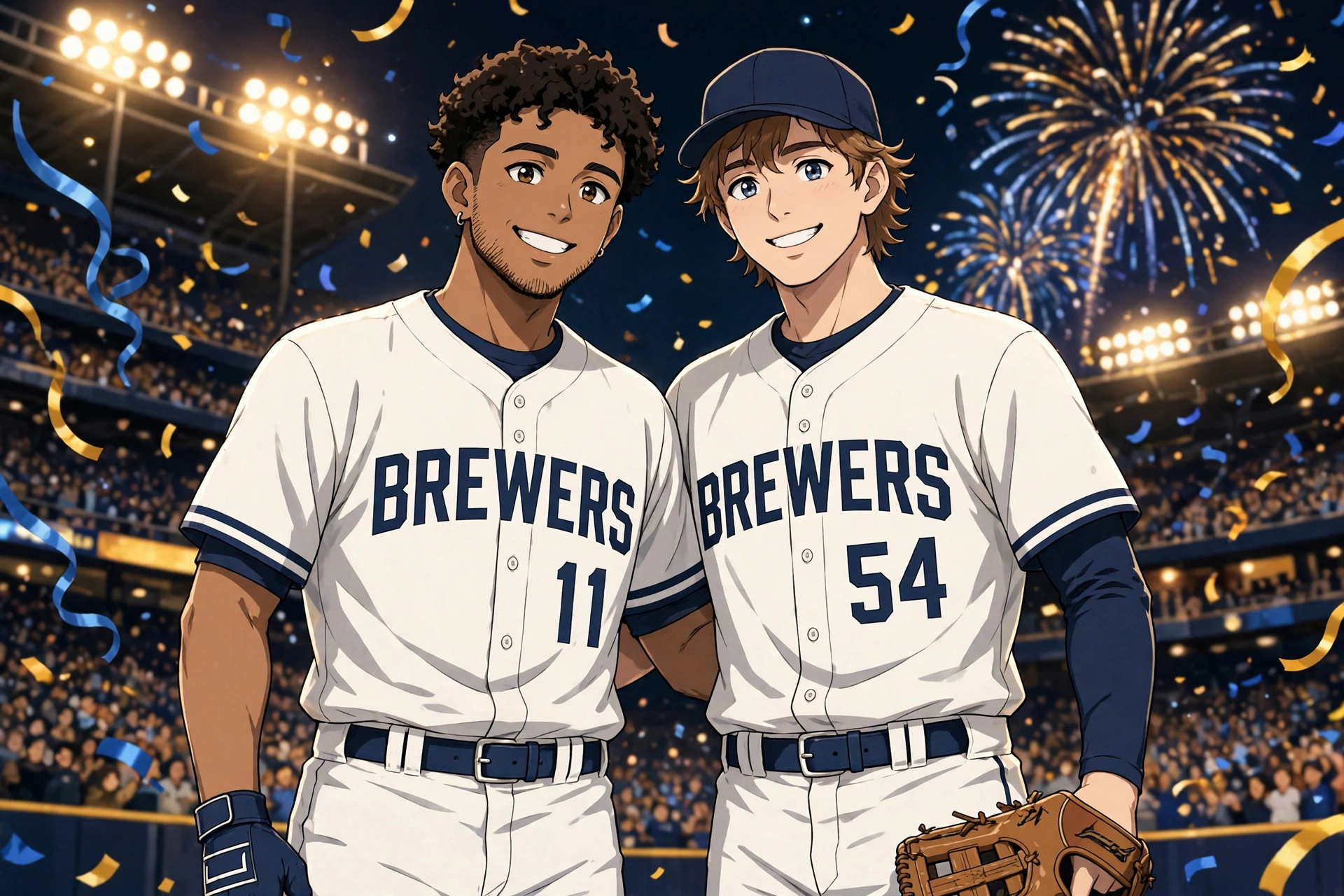
ST. PETERSBURG — Tampa Bay waited 18 years to host a World Series game at Tropicana Field again, through a hurricane that wrecked the dome's roof along the way. What the crowd got on Monday night was a coronation rehearsal for the other team.
The Milwaukee Brewers scored eight runs in the fifth inning — every one of them with two outs, a World Series first — and crushed the Rays 10-1 in Game 3 to take a 3-0 lead in the series. Milwaukee is one win from the first championship in franchise history, and history says this is already over: on the 25 previous occasions a team has taken a 3-0 lead in the World Series, all 25 won it. No team has ever come back.
It was a tight game for four innings, and Freddy Peralta — pitching against the club that raised him — was the reason. Christian Yelich's bloop single scored Jackson Chourio in the third, William Contreras followed with a run-scoring single of his own, and Milwaukee led 2-0 behind Robert Gasser's calm.
The fifth broke everything. Peralta loaded the bases with two outs, Rays manager Kevin Cash went to left-hander Cam Booser, and Brice Turang ripped a two-out, two-strike single that scored two and started a chain of six consecutive run-scoring hits. By the time the inning ended, eight runs had crossed, Peralta's line read five runs on seven hits over 4 2/3 innings, and the Trop had gone quiet in the way buildings do when everybody understands at once.
Milwaukee finished with 16 hits to Tampa Bay's three. It was the biggest World Series blowout since Kansas City beat San Francisco 10-0 in Game 6 in 2014.
Jackson Chourio went 4-for-5 with a pair of doubles, an RBI and a stolen base. The 22-year-old now has eight hits through three games and is making the strongest World Series MVP case on a roster full of candidates — Contreras added three more hits of his own on Monday.
Gasser was the quieter masterpiece. The left-hander threw six shutout innings, allowed one hit with one walk and three strikeouts, and became the first left-hander to face the minimum through six frames in a Fall Classic game since Sandy Koufax in 1965. Milwaukee's shutout streak over the Rays reached 16 innings before Yandy Díaz doubled home Tampa Bay's only run in the ninth, long after Brandon Woodruff had taken over and the outcome was settled.
The Brewers are 10-1 this postseason. Game 4 is Tuesday night at Tropicana Field, and Milwaukee will pitch for a sweep and a title. Tampa Bay will pitch to survive one more day — against a team that has not given it an inch since this series moved south.

Every few autumns the calendars collide. Monday night they collide completely.
October 26 brings the 33rd sports equinox on record — a day when the MLB, NFL, NBA and NHL schedules all land at once — and this one adds a fifth league and two championship stages to the pile. Sports Reference counts 32 equinoxes before this one, back to the first on October 17, 1971, and the club has always stopped at four leagues. The WNBA crashing the date, with a Finals game attached, is what makes No. 33 the deluxe edition. It is also the first equinox ever played on October 26.
The night's centre of gravity sits in St. Petersburg. Game 3 of the World Series puts the Milwaukee Brewers at the Tampa Bay Rays at Tropicana Field (8 p.m. ET), with Milwaukee up 2-0 after taking Game 1 by 3-2 and Game 2 by 5-4 — two one-run games, and now the series moves into the first World Series game at the Trop since the 2008 Rays hosted Philadelphia there. A Tampa Bay loss puts the Brewers one win from the franchise's first championship; a Rays win and the series is a series again.
At the same hour on the other coast, the Atlanta Dream visit the Golden State Valkyries at Chase Center in San Francisco for Game 5 of the WNBA Finals, the series tied 2-2 — a second championship stage on a night the previous 32 equinoxes built out of one World Series and three regular seasons.
Underneath the trophies, the volume is its own story. The NFL contributes the week's loudest regular-season game: the Dallas Cowboys at the Philadelphia Eagles on Monday Night Football (8:15 p.m. ET) at Lincoln Financial Field, an NFC East meeting between two teams that both need it, with the Eagles trying to end a four-game losing streak.
The NBA runs nine games, starting at 7 p.m. ET with the Minnesota Timberwolves at the Cleveland Cavaliers and the Washington Wizards at the Charlotte Hornets, and closing at 10 p.m. ET in Denver, where the Golden State Warriors visit the Nuggets. The NHL runs three: the Los Angeles Kings at the New York Rangers at Madison Square Garden (7 p.m. ET), the Toronto Maple Leafs at the Calgary Flames, and the Detroit Red Wings at the Edmonton Oilers to close the night.
Count it up and the board holds fifteen games across five leagues, two of them championship games, in a window that opens at 7 p.m. ET and runs past midnight on the East Coast.
The equinox only exists because October is the one month the North American calendars genuinely overlap: baseball is finishing, football is mid-season, and basketball and hockey are just starting. Even then it is not annual — the 32nd equinox came on October 27, 2025, and the full list reaches back 55 years to 1971 without ever landing on this date before. Monday is also the rarest weekday in equinox history; Sundays account for more than three-fifths of them.
None of that changes how Monday night actually works for the people watching it. A normal equinox asks you to channel-surf. This one asks you to choose — a World Series game in a dome in St. Petersburg, a Finals game in San Francisco, a division rivalry in Philadelphia, and twelve more games behind them, all live at once.
Clear the evening. There will not be another one like it on this date.
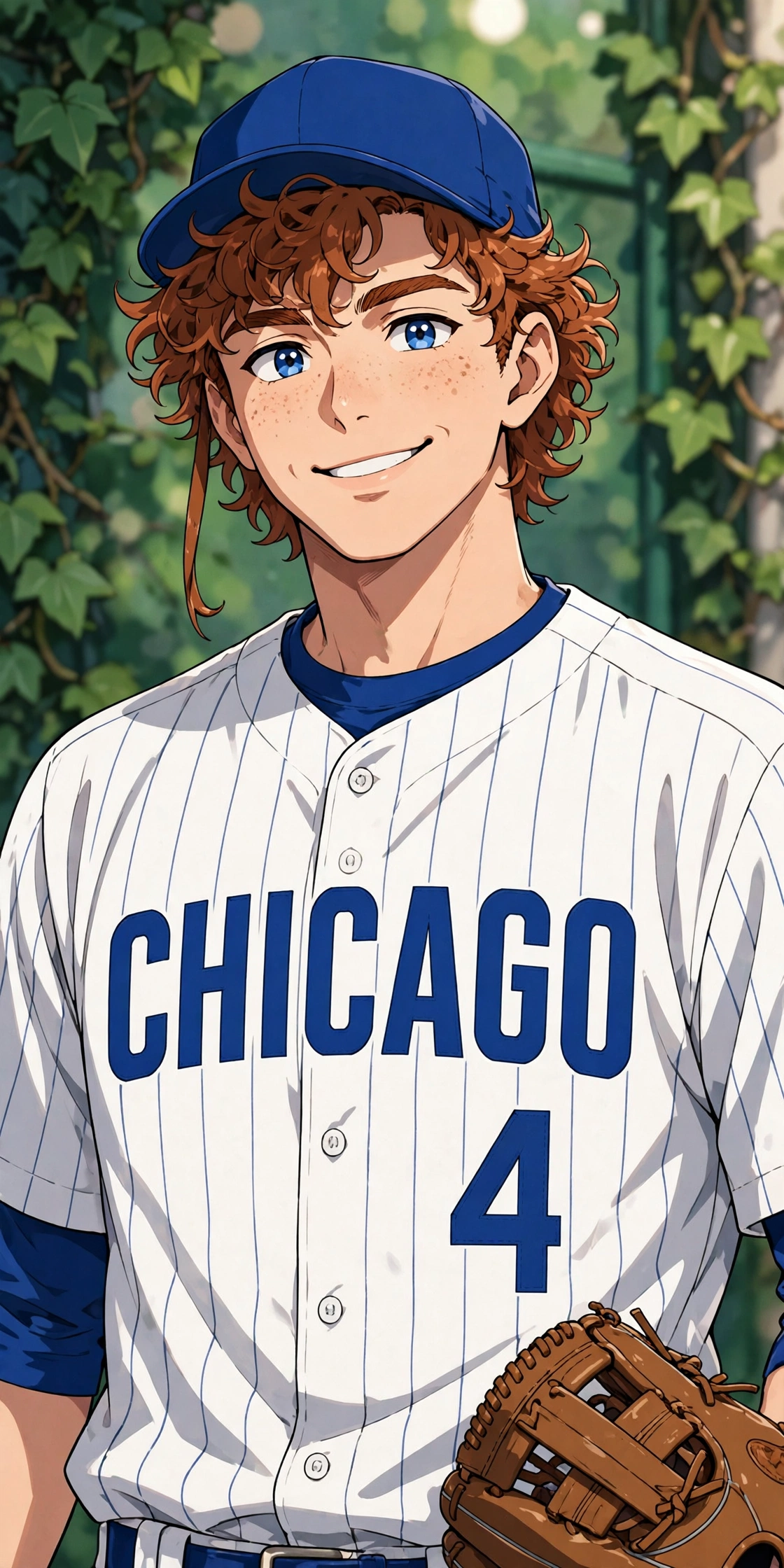
There is one electorate in baseball that cannot be lobbied, flattered or argued with in a column, because it is made up of the men who had to pitch to him, chase him and watch him take second base standing up. On Wednesday, that electorate spoke.
The Major League Baseball Players Association announced that Chicago Cubs center fielder Pete Crow-Armstrong has won both the 2026 Players Choice Awards Player of the Year honor and the National League Outstanding Player award. The Players Choice Awards, given since 1992, are voted on exclusively by active major league players, who cast their ballots in clubhouses in September under the oversight of KPMG auditors. Crow-Armstrong was chosen for Player of the Year over fellow finalists Shohei Ohtani of the Los Angeles Dodgers and Yordan Alvarez of the Houston Astros, and for the NL honor over Ohtani and Philadelphia's Kyle Schwarber.
The ballot was not a reputation vote. Crow-Armstrong, 24, played all 162 games in center field at Wrigley Field, in front of the ivy he patrols as well as anyone in the game, and put together the kind of two-way season that has almost no modern company:
That last line is the one his peers would feel most directly. A slugger can be pitched around and a glove can be hidden; a center fielder who leads the league in home runs while taking hits away in the gaps is a problem in every inning of every game, and the players' vote reads like an acknowledgment of exactly that.
"Going into every year, I always find myself not setting goals," Crow-Armstrong said. "I don't want to be chasing numbers here. I'm not looking at it like, 'I want these numbers because they're good numbers.' I want these numbers knowing I did everything I can to help my team win."
The writers' awards are still to come — the MVP vote will be announced in November — but the players have now given the strongest available preview of how the season was judged inside the game. Crow-Armstrong had already collected Player of the Year honors from Baseball America and Baseball Digest.
Wednesday's announcement covered the full 2026 Players Choice slate:
Awards voted on by writers measure a season from the press box. This one was measured from the other dugout, and on Wednesday the other dugout's verdict was unanimous in direction if not in count: the best player in baseball in 2026, by the players' own accounting, was the center fielder in Chicago.

The wait started in 1969, in Seattle, with a franchise called the Pilots that lasted one season before it became Milwaukee's. It survived the 1982 team that lost a World Series in seven games, and four decades of Octobers that ended somewhere short of this. It ended on Wednesday night at Tropicana Field, indoors in St. Petersburg, with Trevor Megill on the mound and Richie Palacios grounding out for the final out: Milwaukee Brewers 4, Tampa Bay Rays 1, in Game 5 — and the Brewers are World Series champions for the first time in franchise history.
Milwaukee took the series four games to one to close an 11-2 postseason, on top of a franchise-record 103 regular-season wins — the best record in baseball. The city of Milwaukee had not celebrated a World Series champion since the Braves of Henry Aaron won in 1957. The championship drought the Brewers carried into this night, 57 years dating to that first Pilots season, was the third-longest active streak in the sport. It is somebody else's problem now.
Jacob Misiorowski, 24 and the likely National League Cy Young winner, did not overpower Tampa Bay so much as refuse it. He worked 5 2/3 scoreless innings on two hits, one walk and two strikeouts, 86 pitches, holding a Rays lineup that had pieced together its season-saving rally just one night earlier to almost nothing. Per MLB.com's Sarah Langs, he is only the second starting pitcher ever to work five or more innings and allow two or fewer hits in a potential World Series clincher, joining Tom Glavine, who threw eight one-hit innings for Atlanta in 1995.
He did not finish the sixth. After getting the first two outs of the inning, Misiorowski threw a first-pitch cutter to Liam Hicks, grabbed at his right leg and was visited by the training staff. Milwaukee called it a right calf cramp — cramping has followed him before — and after a warm-up pitch could not shake it, he walked off with a slight limp to JoJo Romero, who got Hicks to bounce out to shortstop Cooper Pratt for the final out of the sixth. The bullpen held the 4-0 lead from there, and Megill pitched the final two innings to close the championship.
Milwaukee scored four runs on eight hits and did not hit a home run. Every run was built, and the rookie shortstop was in the middle of most of the building.
Pratt opened the scoring in the second, singling home Brice Turang against Rays starter Drew Rasmussen with two outs. In the fifth, Pratt scored himself, coming home on David Hamilton's single off Kevin Kelly to make it 2-0. The sixth finished the job: Christian Yelich was hit by a Garrett Cleavinger pitch to lead off, and William Contreras doubled him home — Contreras' fourth RBI of the World Series. Turang singled Contreras to third, and after Tyler Wells struck out Sal Frelick, Pratt lifted a sacrifice fly to right to bring Contreras in for 4-0. It was Pratt's seventh RBI of the Series, and his third straight game with at least two runs driven in — one night after his four-hit game, capped by a 12th-inning home run, had put Milwaukee three outs from this title before Tampa Bay's rally took Game 4 away.
Tampa Bay's only answer came with two outs left in its season. In the ninth, Junior Caminero struck out looking, Hicks doubled, Jonny DeLuca struck out swinging, and Chandler Simpson doubled Hicks home to spoil the shutout at 4-1. Palacios grounded out, and that was the ballgame, the series and the drought.
The Rays, who forced this Game 5 with a 12-inning walk-off on Tuesday, have now lost all three World Series they have played in, in 2008, 2020 and 2026. With Milwaukee's win, four active franchises are still waiting for a first title: Tampa Bay, San Diego, Colorado and Seattle.
Milwaukee's path here ran through San Diego in four games in the Division Series, a sweep of the Dodgers in the NLCS, and a World Series in which the only blemish was Tuesday's classic. The Brewers had not played in a World Series since 1982. They have now won one.
From the rail: they did it the way they did everything this year — no home runs, a rookie in the middle of it, a starter who left hurt and a bullpen that did not blink. Fifty-seven years is a long time to wait for a groundout. Palacios hit it, and Milwaukee can stop counting.

ST. PETERSBURG, Fla. — Tropicana Field, the domed park in St. Petersburg that has been the Tampa Bay Rays' home since 1998, watched a championship decided by pitching on Wednesday night — and the man behind the plate for every pitch of it took the trophy home. Milwaukee Brewers catcher William Contreras was named the World Series MVP after the Brewers beat the Rays 4-1 in Game 5 to win the first title in franchise history.
Contreras, 28, is the eighth catcher to win the award, and the first since Salvador Perez for Kansas City in 2015. He is the first World Series MVP the Brewers have ever had.
At the plate, Contreras hit .381 (8-for-21) with four RBIs, a .435 on-base percentage and an .863 OPS across the five games. His sixth-inning double in the clincher scored Christian Yelich and pushed Milwaukee's lead to 3-0.
The larger case was defensive, and it was built in plain sight. Contreras threw out four Rays runners trying to steal, against a Tampa Bay club that ran all season. He started every game of Milwaukee's postseason behind the plate, and he guided a pitching staff that allowed just 12 runs in the five World Series games.
Then there was the new tool, used better than anyone else used it. In the first World Series played with the Automated Ball-Strike challenge system, Contreras won 10 of his 13 challenges — extra strikes taken back for his pitchers, one review at a time, in the biggest innings of the year.
"He posts every day," reliever Aaron Ashby said, via Reuters. "This team's not what it is without this guy." Ace Jacob Misiorowski, the winning pitcher in Games 1 and 5, put it shorter, via Reuters: "It just makes sense."
The MVP caps a postseason in which Contreras hit .373 with three home runs and nine RBIs, after a regular season in which he hit .270 with 18 home runs and 94 RBIs for a Milwaukee team that won a franchise-record 103 games.
It also completes a double no Milwaukee player had ever managed. In March, Contreras won the World Baseball Classic with Venezuela. On Wednesday night, alongside teammates Jackson Chourio and Antonio Senzatela — also part of that Venezuela run — he added a World Series championship in the same year.
After the final out, Contreras embraced his older brother Willson Contreras, the Boston first baseman who won his own World Series with the Chicago Cubs in 2016. "My brother is my role model," William Contreras said, via the Associated Press. "My brother's my best friend."
Milwaukee's title, settled in the clincher Sal Marchetti chronicled from this same park, was a team argument from first pitch to last. The voters still had to pick one name, and they picked the player who had touched nearly every pitch of the Series — with his bat, his arm, and, 10 times out of 13, his eye.

Start with the label, because this one carries it honestly: the San Diego Padres have issued no announcement of their own in the reporting checked Thursday. What exists is a report at the top of the insider chain — Jon Heyman of the New York Post reported Thursday that right-hander Michael King has declined his player option for 2027 and will be a free agent. The Score, TSN and MLB Trade Rumors all carried the decision on Heyman's report. When the club confirms it, the label comes off. Until then, this is what it is: reported, by a man who is usually right.
The arithmetic is the story, and it is not close. King's deal, re-signed with San Diego last winter, was technically a three-year, $75 million guarantee, per MLB Trade Rumors: a $12 million signing bonus, a $5 million salary in 2026, a $28 million player option for 2027 with a $5 million buyout, and a $30 million player option for 2028 behind it. By declining, King takes the $5 million buyout and leaves $53 million on the table — a bet, placed in plain sight, that a healthy season is worth more than the security he just handed back.
A year ago the bet would have been reckless. King went into last winter's market with shoulder and knee questions that had hampered the end of his 2025 season, and the short, option-heavy structure of the Padres deal was the market pricing that doubt. He then answered it the only way a pitcher can: by taking the ball 32 times.
King, 31, went 12-10 with a 3.21 ERA and a 1.18 WHIP across a career-high 185 innings in 2026, striking out 159 and walking 70. He followed it with a 0.64 ERA across three postseason appearances. That is the résumé of the pitcher San Diego thought it was buying when it acquired him from the New York Yankees in the 2023 trade that sent Juan Soto to the Bronx, converted the former reliever into a starter, and watched him finish seventh in National League Cy Young voting in his first Padres season in 2024.
Petco Park, the Padres' downtown home in San Diego's East Village since 2004 — where the century-old Western Metal Supply Co. building stands built into the left-field foul pole — has been the stage for that conversion. If Heyman's report holds, Thursday was the day its current ace decided the next stage of his career will be priced by the whole league, not by one option clause.
Free agency opened Thursday morning, and the starting-pitching shelf is thin at the top. Tarik Skubal headlines the class; MLB Trade Rumors places King in the next tier, alongside Trevor Rogers, Freddy Peralta and Kaima Taira, and notes a multi-year deal with a guarantee in the range of $100 million could be possible for him. King is not eligible for a qualifying offer, having received one last year, which removes the draft-pick compensation that sometimes drags a free agent's market.
The calendar adds pressure on both sides. King, like every 2026-27 free agent, has a five-day window in which he can only sign with his previous club — San Diego, in his case — before he is free to sign with any club on November 2. Beyond that sits December 1, when the collective bargaining agreement expires, and the widely reported expectation around this winter's option decisions is that pitchers are moving early to land multi-year deals before the salary structure is renegotiated.
He was not the only starter to choose the market on Thursday. ESPN's Jesse Rogers reported that Clay Holmes ($12 million option, 3.29 ERA in 101 1/3 innings between the Mets and Cubs) and Matthew Boyd (his share of a $15 million mutual option, 3.91 ERA in 126 2/3 innings) both declined their options with Chicago, leaving all five members of the Cubs' end-of-season rotation as free agents. Thursday, in other words, was not one pitcher's gamble. It was the day this winter's starting market stocked its shelves — and King, by money left behind and innings banked, is the biggest name to step onto it so far.
From the ledger: an option decline is a player pricing himself. King was priced at $53 million guaranteed and said no, a year after the market would not insure his shoulder at any price. One healthy season, 185 innings and three postseason outings rewrote the number. The market now gets to write the next one.
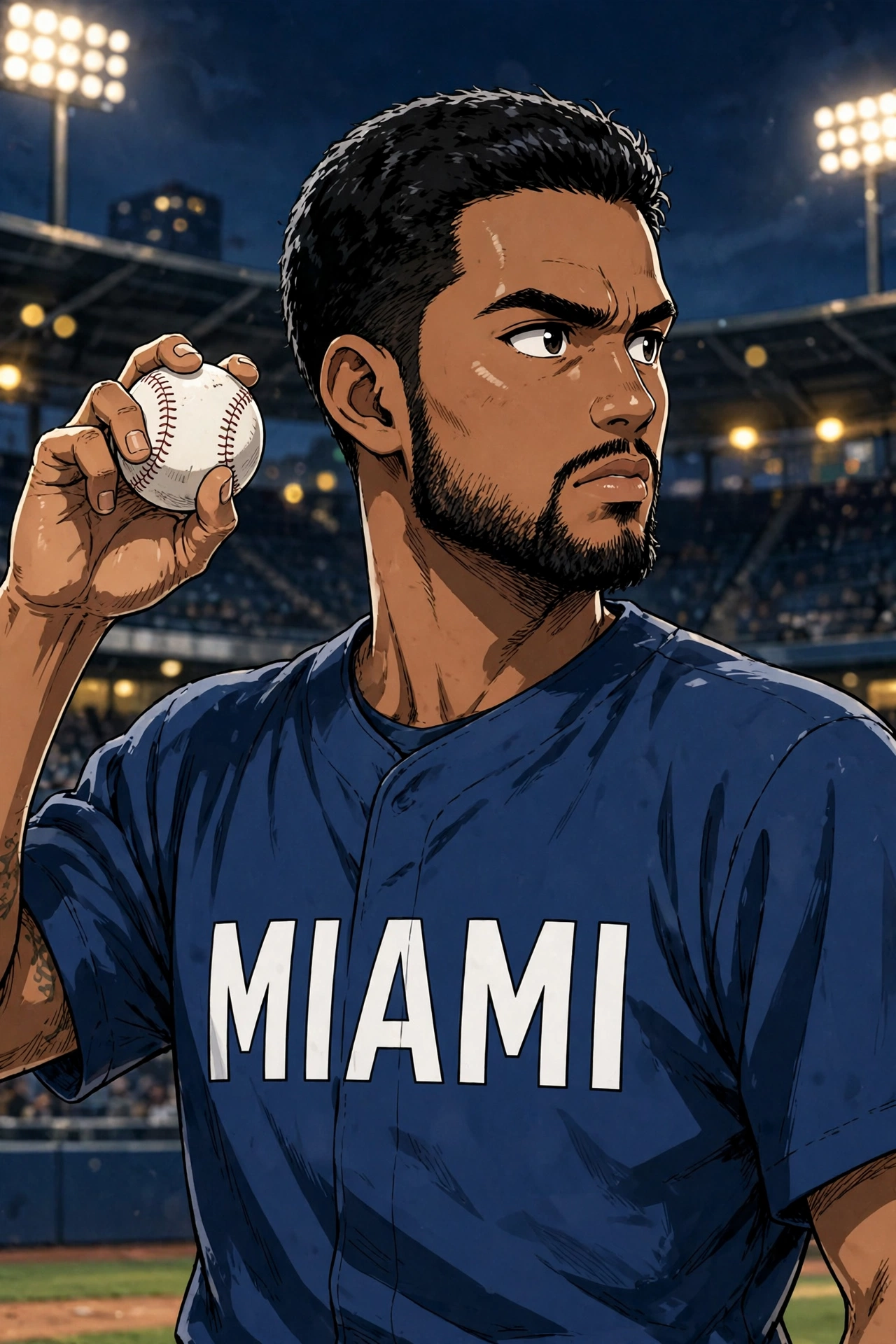
Some option decisions take a front office all five days of the window. This one took none of the suspense. The Miami Marlins announced Friday that they have exercised their $21 million club option on right-hander Sandy Alcantara for the 2027 season, keeping the face of the franchise at the top of their rotation for the final year of his contract. He is scheduled to become a free agent next winter.
Run the arithmetic the way Miami had to run it, and the decision explains itself. Declining the option would not have made Alcantara free — it would have cost the Marlins a $2 million buyout for the privilege of losing him. Picking it up is therefore a net $19 million decision, and for that sum the Marlins buy the one thing their roster has almost none of: certainty. Alcantara's salary is the only guaranteed money on Miami's books for next year; every other player on the roster is arbitration-eligible or pre-arbitration, on a payroll that has made his name a trade rumor at seemingly every deadline for years. This winter, by every report out of Miami, the club has no interest in trading him and every intention of handing him the ball on Opening Day again.
The pitcher they are keeping earned the certainty the hard way. In his second season back from Tommy John surgery, Alcantara threw 214 innings — more than any pitcher in either league — and posted a 3.87 ERA, walking just 6.6 percent of the hitters he faced. The strikeout rate, 17.1 percent, sat well below average, and the ledger does not pretend otherwise; this is no longer the overpowering version who won the 2022 National League Cy Young Award, the first in franchise history. What he remains is the sport's consummate workhorse, a ground-ball starter who takes the ball every fifth day — and, during September's workload shift, even collected saves out of the bullpen, a first in his career.
That is the pitcher who has anchored the rotation at loanDepot park, the club's retractable-roof home in Little Havana since 2012 — through rebuilds, through a surgery, and through the long list of teammates traded away around him. The contract tells the same story of permanence on a club that rarely offers it: the five-year, $56 million extension Alcantara signed in 2021 was already the largest deal the Marlins have given any player since Bruce Sherman bought the team, and Friday's option pushes it to six years and $75 million in total. He rejoins a rotation with Eury Pérez and Max Meyer locked into spots, and the open question behind him is no longer whether Miami keeps its ace, but whether the club spends any of its considerable payroll room around him.
Because the clock is now the story. Alcantara plays 2027 as a walk year, and if Miami wants him beyond it, an extension would likely have to become the largest pitching contract in franchise history to get there. For one more summer, though, none of that needs deciding. The easiest $21 million in baseball is spent, the ace is staying in Miami, and Opening Day already has its starter.

Start with the label, because this one carries it honestly: the New York Mets have issued no announcement of their own in the reporting checked Friday. What exists is a report at the top of the insider chain — Will Sammon of The Athletic reported Thursday that third baseman Bo Bichette will exercise his $42 million player option for the 2027 season and remain with the Mets instead of returning to free agency. Reuters, The Score and MLB Trade Rumors all carried the decision on Sammon's report. When the club confirms it, the label comes off. Until then, this is what it is: reported, by a man who covers this team for a living.
The timing tells the first part of the story. Players had five days after the World Series to settle their options, and Bichette needed less than one. Milwaukee recorded the final out of its first championship on Wednesday night, and by Thursday the Mets' biggest offseason question was already answered. This was the only option decision on New York's books, and it settles third base at Citi Field — the Flushing park the Mets have called home since 2009 — for another summer, with Bichette again set alongside Francisco Lindor on the left side of the infield.
The arithmetic tells the rest. Bichette, 28, signed a three-year, $126 million contract with New York last winter after seven seasons in Toronto. The deal pays $42 million a year, and declining this option would have meant weighing a two-year, $84 million decision, with a $5 million buyout waiting if he walked. He holds the same choice again next winter — another $42 million player option stands in front of the 2028 season — so opting in costs him nothing he cannot revisit in twelve months, at 29, under whatever labor landscape the sport settles into.
That landscape is the shadow over the whole decision. Baseball's collective bargaining agreement expires on December 1, and a free-agent market opening into that uncertainty was never going to pay a premium for the season Bichette just had. His first year in Queens was uneven by any honest measure: a .260/.312/.390 line with 18 home runs and 78 RBIs across 160 games, an OPS under .600 deep into June, and a .285 bat the rest of the way once he found his footing at a new position, third base, after a career at shortstop in Toronto. Respectable is not the same as $42 million a year on the open market, and Bichette read the board the way it was laid out.
For the Mets, the value is certainty at the top of the order. Bichette returns to a lineup built around Lindor and Juan Soto, the club's winter work can aim at the rotation and the rest of the roster instead of a replacement third baseman, and the one decision that could have blown a hole in the infield before free agency even opens is closed. He bet on security, on a second year in the same clubhouse, and on a better walk year in 2027. The reported price of that bet is $42 million — guaranteed, in Flushing, starting now.

Look at the season first, then look at the decision, because the season explains the decision in one line.
Sonny Gray is officially a free agent. The players' association included the Boston right-hander on its list of players who had resolved their options, and Reuters reported Friday that Gray declined his side of the $30 million mutual option for 2027. He collects a $10 million buyout instead, closing the final season of the three-year, $75 million contract he originally signed with St. Louis before the 2024 season. Gray headed a list of 11 new free agents created by Friday's option decisions.
Mutual options are almost never exercised by both sides — that part was expected. What was not routine is the pitcher walking away from this one. Gray, 36, went 18-5 with a 2.72 ERA in 29 starts for Boston, tying for the major-league lead in wins and setting a career high in the process. Across 169 innings he posted a 1.15 WHIP and struck out 149. A pitcher does not decline $30 million on a season like that unless he has read the market and liked what it told him: one guaranteed year at 36, against the chance — likely his last real chance — at a multi-year deal priced off the best win total of his life.
The Boston chapter was short and, on the mound, complete. Gray waived his no-trade clause last November to approve the trade that sent him from St. Louis to the Red Sox, and then delivered the season the deal was made for at Fenway Park, Boston's home on Jersey Street since 1912, where a veteran who pitches to contact and changes speeds has always been able to make the big left-field wall work for him instead of against him. Eighteen wins later, the return on that trade is not in dispute. What Boston does not get is a second year of it — at least not on the option's terms.
Gray has already said, in plain terms, what he is shopping for. "I still want to win a World Series, whether that is [with] Boston or with whoever wants me," he said this fall. Friday's decision is that sentence turned into paperwork: Boston remains a possible answer, but it is now one bidder among thirty, and it will have to win him again on a new contract rather than keep him on an old one.
The eye test and the ledger agree on the size of the hole. Gray was Boston's most reliable starter in 2026 — 29 starts, the wins lead, an ERA under 2.80 — and rotations do not replace that from inside a five-day exclusive negotiating window, which is all the Red Sox hold before the rest of the league can talk to him. The option deadline for the sport is Monday, November 2, and Gray's name now sits near the top of a starting-pitching market that has been stocking itself all week, alongside names like Michael King, who declined his own option in San Diego on Thursday.
There is no compensation softening the exit, either. Gray has received a qualifying offer earlier in his career and is therefore ineligible to receive another, so if he signs elsewhere, Boston receives no draft pick in return. The $10 million buyout is the whole of the parting payment — money Boston pays for a season it already got, attached to a pitcher it no longer controls.
That is the honest shape of Friday's news. Boston traded for one year of Sonny Gray, got the best version of him that has existed in a decade, and now watches him take that season to market. Eighteen wins bought him the right to decline $30 million. Whether they also buy him the World Series chance he says he wants is the winter's question — and for the first time since last November, Boston does not get to answer it alone.
From the eye: do not read the buyout, read the season. A 36-year-old declining $30 million is not leaving money behind — he is telling you exactly what 18-5 and 2.72 are worth on an open market, and daring the league to disagree.
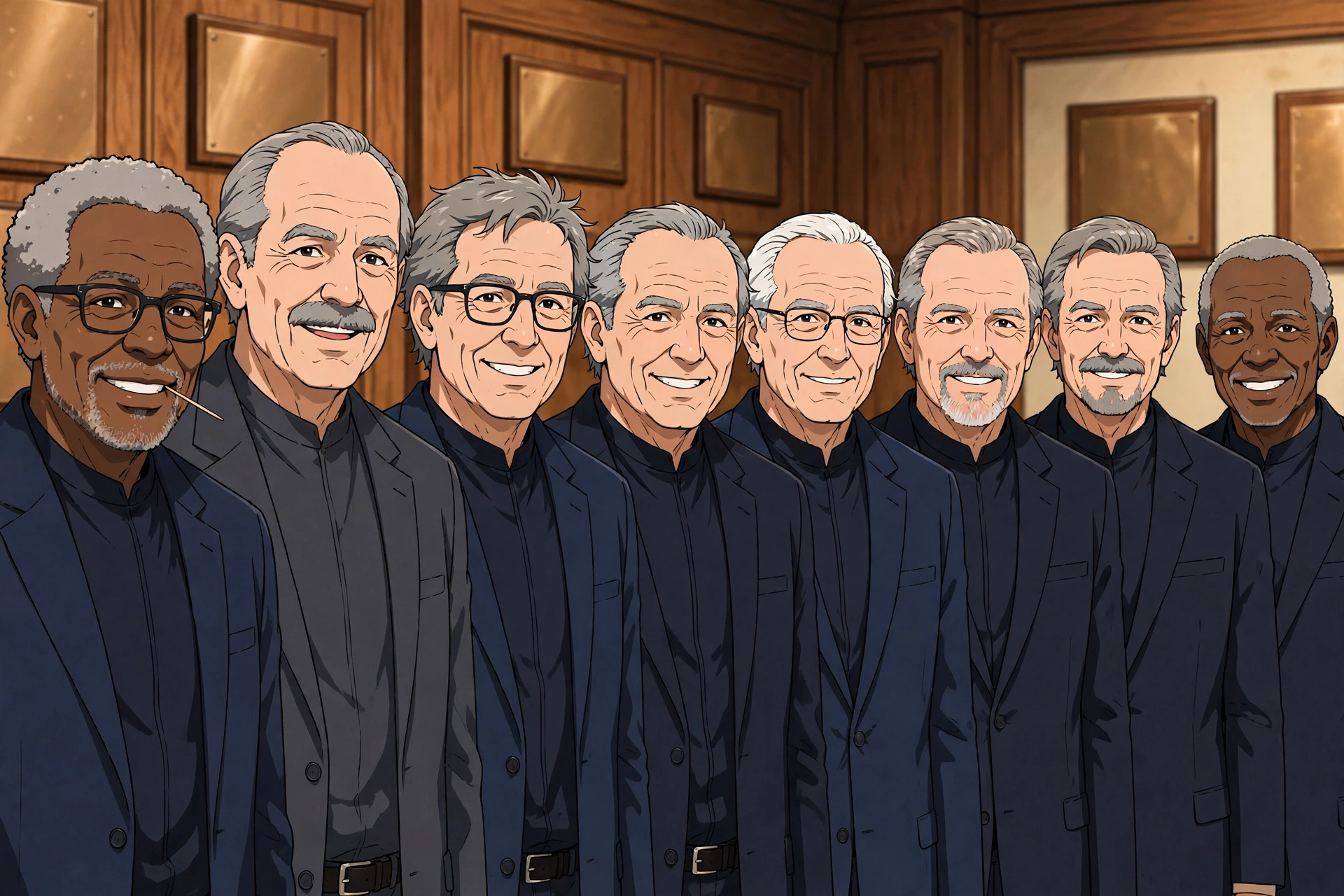
COOPERSTOWN, N.Y. — Run this one through the ledger, because the arithmetic is the story. The National Baseball Hall of Fame announced on Monday the eight names on its Contemporary Baseball Era ballot for managers, executives and umpires. A 16-person committee meets on Dec. 6 at the winter meetings in San Diego. Election takes 75 percent — 12 of the 16 votes. Anyone who clears the line will be inducted in Cooperstown on July 25, alongside the players chosen by the Baseball Writers' Association of America, whose results are announced on Jan. 19.
The Hall itself sits on Main Street in this village in upstate New York, where the museum opened its doors on June 12, 1939. The plaques that line its gallery are the endpoint every name on this ballot is now five weeks from reaching — or missing, in one famous case, by a single vote for the third time.
The eight: managers Dusty Baker, Bruce Bochy, Joe Maddon and Lou Piniella; general managers Sandy Alderson and Brian Sabean; the late Atlanta Braves owner Ted Turner; and Bill White, who was a five-time All-Star first baseman, a Yankees broadcaster for 18 years and president of the National League from 1989 to 1994.
The four skippers account for 7,652 regular-season wins and seven World Series championships as managers, and the cases are four different shapes.
Bochy, 71, has the largest totals and the strangest bottom line. A catcher for Houston, the Mets and San Diego from 1978 to 1987, he managed San Diego (1995-2006), San Francisco (2007-19) and Texas (2023-25) for 28 seasons, going 2,252-2,266 — a losing overall record built largely in San Diego — while winning four World Series, in 2010, 2012 and 2014 with the Giants and in 2023 with the Rangers. He was the National League Manager of the Year in 1996.
Baker, 77, played 19 seasons (1968-86) for the Dodgers, Atlanta, Oakland and San Francisco, hitting .278 with 242 home runs and 1,013 RBIs, then managed five clubs over 26 seasons — the Giants, Cubs, Cincinnati, Washington and Houston — to a 2,183-1,862 record. His one championship came last in the sequence, with Houston in 2022. He was voted Manager of the Year in 1993, 1997 and 2000.
Maddon, 72, went 1,382-1,216 over 19 seasons with the Angels, Tampa Bay and the Cubs, and his line on the ledger is a single October: he led the 2016 Cubs to the franchise's first World Series title since 1908. He won Manager of the Year awards in 2008, 2011 and 2015.
Piniella, 83, is the ballot's returning heartbreak. The 1969 American League Rookie of the Year hit .291 over 18 playing seasons, then managed the Yankees, Cincinnati, Seattle, Tampa Bay and the Cubs for 23 seasons, going 1,835-1,713, winning the 1990 World Series with the Reds and three Manager of the Year awards. The committee has scored him before: he received 11 votes in 2023, when Jim Leyland was elected, and 11 votes in 2018. Eleven is one short of 12. Twice.
Alderson, who turns 79 on Nov. 22, was Oakland's general manager from 1983 to 1997, helping the Athletics win the 1989 World Series. He was Major League Baseball's executive vice president for baseball operations from 1998 to 2005, chief executive of the San Diego Padres from 2005 to 2009, and the Mets' general manager from 2010 to 2018 before returning as team president from 2020 to 2023.
Sabean, 70, arrived in San Francisco in 1993 after scouting and player-development roles with the Yankees, and as the Giants' general manager from 1996 to 2014 he won three World Series titles, then served as executive vice president of baseball operations from 2015 to 2018. Read back to back, the two executive cases are the same argument made in two cities: the men who supplied the players for other men's championships.
Turner, who died on May 6 at age 87, bought the Braves in 1976 and ran the club until the 1996 merger of Turner Broadcasting System with Time Warner. His baseball legacy runs through a television set: he turned Atlanta's WTBS into a nationally distributed superstation, making the Braves a national team in the cable era, and his club won the 1995 World Series.
White, 92, hit .286 with 202 home runs and 870 RBIs from 1956 to 1969 for the New York and San Francisco Giants, St. Louis and Philadelphia, won the 1964 World Series with the Cardinals, broadcast Yankees games from 1971 to 1988, and then ran the National League as its president from 1989 to 1994 — the only man on this ballot who has already held three different jobs the Hall exists to remember.
The structure matters as much as the résumés. This committee considers the contemporary era — contributions from 1980 on — and meets every three years; the classic era committee meets in December 2027 and the contemporary players committee in December 2028. Managers were eligible with 10 or more big league seasons and five years of retirement, with those 65 and older eligible six months after retiring; executives must be retired five years, unless they are active and 70 or older. The ballot itself was selected by a historical overview committee, and the identities of the 16 voters will be announced closer to the meeting.
The trapdoor is at the bottom: a candidate who does not receive at least five of the 16 votes is not eligible for this committee's next ballot three years from now, and a candidate who falls below five votes on multiple ballots loses eligibility for the committee altogether.
So Dec. 6 is not a formality for anyone on this list. For Bochy and Baker it is a scoring of two of the winningest managers of their generation. For White, Alderson, Sabean and Turner's candidacy, it is a rare window — this exact ballot only opens once every three years. And for Piniella, the ledger has been sitting at 11 for eight years. He does not need a landslide. He needs one more vote than he has ever gotten.
From the ledger: every other line in this sport eventually settles. Wins settle in October, contracts settle in December, and this one — 7,652 wins, seven rings, three executives and a league president — settles at 12 votes in a San Diego meeting room, with a bronze plaque on Main Street as the payout.

The best hitter in Japan this year is officially on the market, and the market has a deadline inside a deadline. Infielder Teruaki Sato of the Central League's Hanshin Tigers entered Major League Baseball's posting system on Sunday, the Associated Press reported, and will be available to sign as a free agent from Monday until Dec. 16.
Run Sato's season through the ledger and the interest explains itself. The left-handed-hitting 27-year-old third baseman and occasional outfielder hit .306 with 39 home runs and 106 RBIs this year, winning the Central League's Triple Crown. He was the Central League's Most Valuable Player in 2025, when he batted .277 with 40 homers and 102 RBIs, and he went 3 for 10 with two RBIs for Japan in this year's World Baseball Classic.
That bat has played its whole career at Hanshin Koshien Stadium in Nishinomiya — Hanshin's home since 1936, the ivy-walled, dirt-infield cathedral that is the most famous ballpark in Japan and the hardest place in that league to look ordinary. Sato has never looked ordinary there. Now every one of the 30 major league clubs gets the same 45 days to decide what that bat is worth in dollars.
The posting system is not free agency with a different label; the former club is paid, too. Under MLB's posting agreements with Nippon Professional Baseball and the Korea Baseball Organization, the release fee is 20 percent of the first $25 million of a major league contract, including earned bonuses and options, dropping to 17.5 percent of the next $25 million and 15 percent of any amount over $50 million, with a supplemental fee of 15 percent on earned bonuses, salary escalators and exercised options.
Sato is not the only name in the window. Right-handers Kaima Taira of the Saitama Seibu Lions and Hiromi Itoh of the Hokkaido Nippon-Ham Fighters were also posted Sunday on the same Dec. 16 deadline — Taira, who turns 27 on Nov. 15, went 12-5 and led the Japanese major leagues with a 1.36 ERA after moving back into the starting rotation, and Itoh, 29, went 10-10 with a 3.18 ERA and 159 strikeouts in 172 2/3 innings a year after winning the Sawamura Award. South Korea's Si-Hwan Roh of the Hanwha Eagles, who batted .283 with 25 homers and 96 RBIs, faces the shorter Korean window: 30 days, closing Dec. 1. The signing deadline is 5 p.m. EST on the final day of each period.
Here is the complication every front office is pricing tonight: MLB's collective bargaining agreement with the players' association expires Dec. 1, and the Associated Press reports a lockout is likely to follow. Sato's window formally runs two weeks past that date, but a posted player trying to sign into a work stoppage is not negotiating on a level field — the precedent from the last lockout, in 2021-22, is that posted players were frozen during the stoppage and their windows resumed after a settlement.
So the honest window is shorter than the printed one. A club that wants Sato signed before the game stops has until Dec. 1 to do it, and Sato — who, by Japanese media accounts relayed in the American coverage, asked to be posted early precisely so he could sign before a possible lockout — knows it. A Triple Crown does not come to this market often. This one arrived with a clock attached, and the clock started Monday.
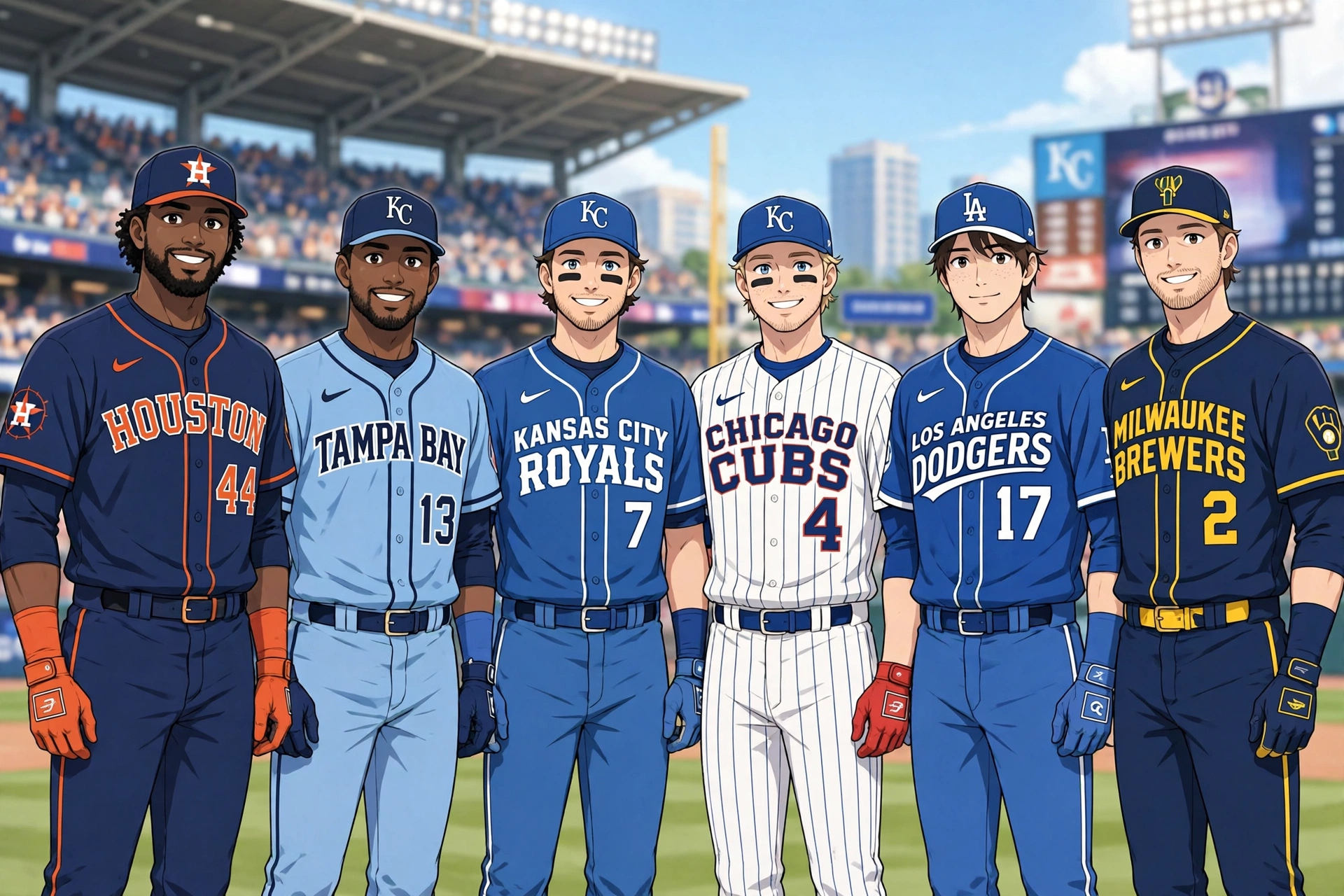
The Baseball Writers' Association of America announced the finalists for its 2026 awards on MLB Network on Monday evening — the top three vote-getters for each of five awards in each league, listed alphabetically, with the winners to be revealed across next week: Rookie of the Year on Nov. 9, Manager of the Year on Nov. 10, the Cy Young and the new Reliever of the Year on Nov. 11, and the Most Valuable Player awards last, on Nov. 12. For the first time, the writers are also voting on a Reliever of the Year in each league.
The MVP slates are the headline. In the American League: Houston's Yordan Alvarez, Tampa Bay's Junior Caminero and Kansas City's Bobby Witt Jr. In the National League: the Chicago Cubs' Pete Crow-Armstrong, the Los Angeles Dodgers' Shohei Ohtani and Milwaukee's Brice Turang.
Start with the number that ends arguments. Crow-Armstrong put up 10.6 fWAR — not just the best mark among the six finalists, but a figure in a different tier from everyone else on either slate. His line is power and speed at once: a .280/.372/.570 slash, 45 home runs, 107 RBI and 41 stolen bases, from the Cubs' centre fielder. The read around the announcement matched the arithmetic — Crow-Armstrong is expected to run away with the award when it is announced on Nov. 12.
Ohtani's presence is its own streak: a top-three MVP finish for the sixth straight year, after winning the NL award in each of his first two seasons with the Dodgers and the AL award twice before that with the Angels. This year's case was split, as only his can be — .275/.377/.512 with 30 home runs and 81 RBI at the plate, and a 1.79 ERA in 14 starts on the mound, worth 3.7 fWAR — and the expectation Monday night was that the streak continues as a finalist, not a winner. Turang completes the slate with the quietest loud season in the field: .268/.366/.450, 21 home runs, 100 RBI, 19 steals and 102 runs scored for the World Series champion Brewers, good for 5.9 fWAR.
The AL race is the genuine contest. Alvarez owns the biggest bat on the slate — .316/.432/.601, 42 home runs, 106 RBI, 105 runs scored, 6.8 fWAR — and slugged Houston into the playoffs; he goes into Nov. 12 as the favourite. Caminero matched him home run for home run, 42 of them, with a .276/.360/.524 line, 101 RBI and 100 runs scored (5.3 fWAR) for Tampa Bay. Witt Jr. is the value candidate: only 18 home runs and 54 RBI, but a .281/.359/.441 line, 45 stolen bases, 94 runs and a 7.0 fWAR — the highest of the three AL finalists — built at shortstop in 143 games. Three different definitions of valuable, one ballot already cast: the finalists are the top three vote-getters, so the argument now is only about the order.
The Cy Young slates carry the season's strangest double. Cleveland's Parker Messick (2.56 ERA, 193 strikeouts in 186 1/3 innings) is a finalist for both AL Cy Young and AL Rookie of the Year. He is joined on the Cy Young ballot by Toronto's Dylan Cease (2.40 ERA) and the Yankees' Cam Schlittler (1.95 ERA, 6.2 fWAR). In the NL, Milwaukee's Jacob Misiorowski (1.80 ERA, 252 strikeouts, 6.6 fWAR) leads a slate with Atlanta's Chris Sale (2.16 ERA) and Philadelphia's Cristopher Sánchez (2.91 ERA over 207 innings).
Rookie of the Year: Detroit infielder Kevin McGonigle, Messick and Boston's Payton Tolle in the AL; the Mets' Carson Benge, Cincinnati's Sal Stewart (32 home runs, 111 RBI) and St. Louis' JJ Wetherholt in the NL. Manager of the Year: Tampa Bay's Kevin Cash (98-64, a 21-win improvement and the AL East), Boston's Chad Tracy and the White Sox' Will Venable in the AL; Philadelphia's Don Mattingly, Milwaukee's Pat Murphy — 103-59, the best record in baseball, chasing a third straight award — and Atlanta's Walt Weiss in the NL. The first Reliever of the Year finalists are Tampa Bay's Bryan Baker (1.44 ERA, 41 saves), Cleveland's Cade Smith and Toronto's Louis Varland in the AL, and Philadelphia's Jhoan Duran, Milwaukee's Trevor Megill and San Diego's Mason Miller in the NL.
Milwaukee, days removed from winning the World Series, places a finalist in four different awards — Turang, Misiorowski, Murphy and Megill. The Brewers' winter is already decorated. Everyone else waits for next week, one envelope at a time.
From the eye: finalist night is baseball's way of telling you the arguments are over and only the order is secret. Crow-Armstrong's season needs no advocate. Alvarez against Witt is the last real debate of 2026 — the biggest bat against the most complete player — and the writers have already had it.
Every Mets fan of a certain age can see the ending without closing their eyes: Shea Stadium, Game 5, the Baltimore Orioles down to their last outs, and the left-hander from Minnesota still on the mound in the ninth, finishing what the Miracle Mets had started. Jerry Koosman threw the complete game that closed the 1969 World Series. He leapt into catcher Jerry Grote's arms when it was over.
Jerry Koosman has died at 83. The New York Mets announced his death on Sunday, November 1, and the news was confirmed independently by USA Today, the New York Post, NorthJersey.com and MLB Trade Rumors. Mets vice president of alumni relations Jay Horwitz said Koosman had been battling multiple illnesses. He died in Osceola, Wisconsin, according to multiple reports.
Koosman was born December 23, 1942, in Appleton, Minnesota. He made his major-league debut with the Mets in 1967 and broke out a year later — a 2.08 ERA in 1968, the first of back-to-back All-Star selections, and a second-place finish in the National League Rookie of the Year voting. Alongside Tom Seaver, he became the backbone of a rotation that carried a franchise which had known nothing but losing seasons into baseball history.
In 1969 Koosman went 17-9 with a 2.28 ERA for the Miracle Mets, then won both of his World Series starts against the heavily favoured Orioles — 8⅔ innings in Game 2, and the complete-game 5-3 win in the Game 5 clincher at Shea. Shea Stadium, the Mets' home in Flushing from 1964 until 2008, never hosted a louder afternoon. Koosman was on the mound for its signature moment.
He helped the Mets back to the World Series in 1973, winning two more Series games in a losing cause against Oakland, and finished second in the 1976 National League Cy Young Award voting. Across 12 seasons in New York he went 140-137 with a 3.09 ERA and 1,799 strikeouts in 2,544⅔ innings. He remains the winningest left-hander in franchise history. The Mets inducted him into their Hall of Fame in 1989 and retired his No. 36 in August 2021 — Seaver and Dwight Gooden are the only other Mets pitchers so honoured.
Koosman's final seven seasons were spent with the Minnesota Twins, the Chicago White Sox and the Philadelphia Phillies — including a return to his home state with Minnesota — before knee trouble closed his career after the 1985 season, at age 42. The full line, agreed by every outlet that recorded it: 222 wins against 209 losses, a 3.36 ERA and 2,556 strikeouts in 3,839⅓ innings across 19 major-league seasons.
"We don't have World Series rings without Jerry Koosman," former Mets outfielder Ron Swoboda told the New York Post on Sunday. It is the simplest accurate summary available. Seaver was the franchise's face. Koosman was the left arm that finished its first miracle — and on the afternoon that still defines the Mets, the last out, like the first pitch of Game 5, belonged to him.
From the eye: rotations are remembered in pairs — Seaver and Koosman, the right-handed genius and the Minnesota lefty who would not come out of the game. Fifty-seven years after Shea shook, the pair is broken. The complete game stands.

The 45 days were never really 45 days. On Monday, Major League Baseball made that official.
MLB confirmed Monday that it will not amend its posting agreement with Nippon Professional Baseball, USA TODAY's Bob Nightengale reported. That means the three Japanese players posted on Sunday — Hanshin Tigers infielder Teruaki Sato, Saitama Seibu Lions right-hander Kaima Taira and Hokkaido Nippon-Ham Fighters right-hander Hiromi Itoh — must sign with a major league club by Dec. 1 if a lockout follows the expiration of the collective bargaining agreement, or they will be ineligible to sign with an MLB team in 2027. Ken Rosenthal of The Athletic reported the same position: the league will not change the negotiating window this time.
Negotiations opened Monday, the same day every free agent in the sport could begin talking to all 30 clubs at 5 p.m. ET. On paper, the three posted players hold a 45-day window that runs into mid-December. In practice, they have less than 30 days.
This was not a surprise sprung on the players' side this morning. According to a Major League Baseball Players Association memo to agents obtained by USA TODAY, the union asked in August to extend the tolling period in the posting agreement so posted players could sign after a lockout ended. MLB denied that request on Tuesday. The union told agents last week to prepare for a strict deadline, and said it is exploring its options.
The denial lands hardest on Sato. The 27-year-old left-handed-hitting third baseman and outfielder is coming off a Central League Triple Crown season at Hanshin Koshien Stadium in Nishinomiya — the ivy-walled ballpark Hanshin has called home since 1936 — where he hit .306 with 39 home runs and 106 RBIs. By the accounts carried in this morning's posting coverage, he asked to be posted early precisely so he could sign before a stoppage. Monday's confirmation means early may still not be early enough unless a deal gets done inside the month.
Taira and Itoh face the same clock with smaller spotlights and no less at stake. Taira, who turns 27 on Nov. 15, went 12-5 with a Japanese-major-league-best 1.36 ERA for Seibu, striking out 141 in 146 innings. Itoh, 29, went 10-10 with a 3.18 ERA and 159 strikeouts in 172 2/3 innings for Nippon-Ham. Both are starting pitchers in their prime posting years; a missed window does not pause their careers, it sends them back to Japan for another season and another posting cycle.
There is a precedent here, and Monday's news is that it no longer applies. Before the 99-day lockout of 2021-22, MLB amended the agreement and tolled the 45-day window, which allowed outfielder Seiya Suzuki to sign a five-year, $85 million contract with the Chicago Cubs eight days after that lockout ended on March 10. Posted players waited out the stoppage then because the rules let them.
No such protection exists now. One more distinction matters, and USA TODAY stated it plainly: unsigned MLB free agents who reach Dec. 1 without a deal remain eligible to sign once a lockout ends. Posted players, under the position MLB confirmed Monday, do not get that second chance in 2027. South Korea's Si-Hwan Roh of the Hanwha Eagles is in a different position again — his KBO window was always 30 days and was always set to close Dec. 1.
So the market for the three biggest names coming out of Japan this winter now runs on one date, not two. The printed window says mid-December. The league, on the record Monday, says Dec. 1. Front offices, agents and three players in Japan all have to plan around the second one.
NEW YORK — The number moved, and so did the year. Major League Baseball proposed on Tuesday that the salary cap it has chased for three decades not arrive until 2028, one season later than its previous plan, and raised the figures attached to it: a hard cap of $258.2 million and a payroll floor of $180.2 million for 2028, calculated on luxury-tax payrolls using average annual values. The league's earlier offer stood at a $245.3 million cap and a $171.2 million floor. The rest of the owners' package would still take effect in 2027.
The timing is the story underneath the arithmetic. Free-agent negotiations for the 2026-27 offseason opened on Monday. The five-year collective bargaining agreement, reached in March 2022 on the 99th day of a lockout, expires on Dec. 1, and management is expected to lock the players out again when it does. A cap imposed for 2027 would land in the middle of a market already open; the league's stated reasoning is that clubs carry too many existing commitments for next season to cut spending that fast.
"We recognize that clubs will need a full offseason to prepare to operate within the cap and floor system," MLB spokesman Glen Caplin said in a statement. "This proposal would allow a smoother transition into the cap and floor system without delaying key player benefits, including earlier free agency, a $1 million minimum salary, a 30% increase to the pre-arbitration bonus pool and transactional reform that will reduce roster churn."
Run the proposal against the current map and it redraws most of it. Management said eight teams would have to reduce current payroll by a combined $528 million to get under the 2028 cap: Boston, the Chicago Cubs, the Los Angeles Dodgers, the New York Mets and Yankees, Philadelphia, San Diego and Toronto. Twelve teams would have to increase spending by a combined $636 million to reach the floor: the Athletics, the Chicago White Sox, Cincinnati, Cleveland, Colorado, Miami, World Series champion Milwaukee, Minnesota, Pittsburgh, St. Louis, American League champion Tampa Bay and Washington.
The floor comes with a ramp. A team could sit as low as 90 percent of the floor in 2028 — $162.18 million — provided it spends the full floor amount across a three-year period. For 2027, the league would keep the current luxury-tax system and revenue-sharing plan untouched, at the same thresholds and tax rates as 2026, then centralize MLB's media revenue for 2028.
The whole structure is tied to a 50-50 split of revenue between owners and players — a definition the players' association disputes, starting with how revenue and expenses are counted. Cap and floor figures would also drop if a work stoppage cuts into league revenue. And the association's position on the central item has not moved: it has said it will never accept a cap. MLB had not proposed one since the negotiations that produced the seven-and-a-half-month strike of 1994, which cancelled the World Series for the first time in 90 years.
Wrapped around the cap is a set of immediate, countable benefits. The minimum salary would rise from $780,000 to $1 million for players with at least two years of service, and to $900,000 for the rest, with a further $100,000 available from the pre-arbitration bonus pool for a player who accrues a full year of service without spending half the season on the injured list. Minor league minimums would rise from $63,600 to $73,400 on an initial big league deal and from $127,100 to $146,700 on later contracts. The pre-arbitration bonus pool itself would grow from $50 million in 2026 to $65 million in 2027, and up to $75 million over the term of a seven-year agreement running through the 2033 season.
Owners would also pay a one-time bonus drawn from luxury-tax proceeds the current agreement earmarks for players' 401(k) accounts, scaled to 2026 service time: $285,000 for a player in the majors for at least 172 of the 187-day season, $213,400 for three-quarters of a year, $142,300 for half and $71,100 for a quarter.
On free agency, the owners moved toward the union in two places. They would accept the proposal to cut the service time required for free agency from six years to five for players at least 30 years old — though a team would keep the right to make such a player a qualifying offer, and a player who rejected it would become eligible for salary arbitration instead. And they would accept eliminating qualifying offers for all other free agents — a notable concession the day after only eight players received the $23.15 million offer under the current system. The transactional package would eliminate a player's fourth option year, cut optional assignments from five per season to four, move Rule 5 draft protection a year earlier and allow a Rule 5 selection to be optioned.
None of it is agreed. What Tuesday established is the shape of the owners' ask with four weeks left on the clock: the cap survives every version of their offer, only its start date and its price moved — up $12.9 million at the top and $9 million at the bottom, and out one full season. The union has never accepted the premise at any price. Dec. 1 decides which side's calendar governs the winter.
From the eye: a delayed cap is still a cap, and both sides know it — that is why the owners dressed it in a $1 million minimum and an earlier free agency, and why none of the dressing changes the argument. Watch the three-year floor rule. It is the one clause in this package a small-market front office could actually build a roster around, whichever way the big fight ends.
Louisville Slugger announced the finalists for its 2026 Silver Slugger Awards on Thursday, revealed exclusively by FanSided, the award's official announcer. The Silver Sluggers go to the best offensive player at each position in each league, and the electorate is the men in the dugouts: every club casts four votes — its manager and three coaches of the team's choice — with the accounting firm DMLO verifying the count. The winners will be announced on Tuesday, Nov. 17 at 6 p.m. ET, streamed on FanSided's The Baseball Insiders podcast and broadcast from the Bat Vault at the Louisville Slugger Museum & Factory in Louisville, Kentucky — the room where Hillerich & Bradsby keeps decades of its finest bats, which is the correct place to hand out an award for hitting.
Read the list the way the eye reads it, and three shapes stand out before you ever get to the favourites.
Three finalists were nominated at two different positions. Detroit's Kevin McGonigle is a finalist at American League shortstop and at AL utility. Milwaukee's Jake Bauers is a finalist at National League first base and at NL utility. San Diego's Fernando Tatis Jr. is a finalist in the NL outfield and at NL utility. In an award voted position by position, a double nomination is the managers and coaches saying the same thing two ways: wherever you stood this man, the bat played.
Tampa Bay outfielder Chandler Simpson may be the most unconventional nominee in the award's history. Simpson has yet to hit a home run across the first two seasons of his major-league career — and he is a Silver Slugger finalist anyway, on the strength of a different kind of offensive season, one that peaked with a .400 average and a .900 OPS in the World Series. The award is named for a bat company, not a body type. Simpson's nomination is the voters conceding that run production wears more than one shape.
The head-to-head the whole list turns on is at NL designated hitter: Kyle Schwarber against Shohei Ohtani, a rematch of last year's vote, which Schwarber lost. This time Schwarber brings 45 home runs — tied for the National League lead with Pete Crow-Armstrong — against an Ohtani season that was, by Ohtani's standard, a down year: .275/.377/.512 with 30 home runs. The eye's read is simple: if the award is ever going to move, it moves on a year exactly like this one.
And then there is Mike Trout, an AL outfield finalist looking to extend his active lead in individual Silver Sluggers by adding a tenth. A decade of these things is its own argument about who the best hitter of his era has been, made one November at a time.
American League — Catcher: Dillon Dingler (Detroit), Carter Jensen (Kansas City). First base: Pete Alonso (Baltimore), Willson Contreras (Boston). Second base: Kody Clemens (Minnesota), Chase Meidroth (Chicago). Shortstop: Kevin McGonigle (Detroit), Zach Neto (Los Angeles), Bobby Witt Jr. (Kansas City). Third base: Junior Caminero (Tampa Bay), Miguel Vargas (Chicago). Outfield: Wilyer Abreu (Boston), Randy Arozarena (Seattle), Cody Bellinger (New York), Jac Caglianone (Kansas City), Chase DeLauter (Cleveland), Riley Greene (Detroit), Tristan Peters (Chicago), Chandler Simpson (Tampa Bay), Mike Trout (Los Angeles) — nine finalists for three awards. Designated hitter: Yordan Alvarez (Houston), Ben Rice (New York). Utility: Sam Antonacci (Chicago), Ezequiel Duran (Texas), Kevin McGonigle (Detroit). Team award: Chicago, Houston, Minnesota and Tampa Bay.
National League — Catcher: Hunter Goodman (Colorado), Gabriel Moreno (Arizona) — the hardest call on either slate, Goodman's 41 home runs against Moreno's .311 average and 143 OPS+. First base: Jake Bauers (Milwaukee), Alec Burleson (St. Louis), Rafael Devers (San Francisco), Matt Olson (Atlanta). Second base: Brandon Lowe (Pittsburgh), Brice Turang (Milwaukee). Shortstop: CJ Abrams (Washington), Elly De La Cruz (Cincinnati), Otto Lopez (Miami) — two 30-30 shortstops and the league leader in base hits in one three-man race. Third base: Alex Bregman (Chicago), Max Muncy (Los Angeles) — Bregman's fifth career finalist nod, arriving with his third different team. Outfield: Pete Crow-Armstrong (Chicago), Corbin Carroll (Arizona), Jackson Chourio (Milwaukee), Seiya Suzuki (Chicago), Fernando Tatis Jr. (San Diego), Jordan Walker (St. Louis), James Wood (Washington). Designated hitter: Shohei Ohtani (Los Angeles), Kyle Schwarber (Philadelphia). Utility: Jake Bauers (Milwaukee), Sal Stewart (Cincinnati), Fernando Tatis Jr. (San Diego). Team award: Chicago, Los Angeles, Milwaukee and Washington.
One drought rides on the NL second-base race: Pittsburgh is the only team without a Silver Slugger win since 2021, and the Pirates have not won one since 2015. Lowe, one of two finalists at his position, is their chance to end it.
From the eye: a finalist list is the managers and coaches of both leagues telling you, on the record, whose bats they spent the season game-planning around. This one says a homerless outfielder belonged in the conversation, three men belonged in it twice — and that even Shohei Ohtani has to win his argument again when the other man hit 45. The answers land Nov. 17, in a vault full of bats.

ST. LOUIS — Run the Cardinals' front office through the ledger and, for two years, one line stayed blank: general manager. On Friday the club filled it. St. Louis announced that Rob Cerfolio has been promoted to general manager, a rise for the 34-year-old who has served as an assistant general manager since joining the organization in 2024. He will report to president of baseball operations Chaim Bloom, and he takes the job as Bloom's clear No. 2.
Cerfolio arrived in St. Louis charged with the rebuild underneath the rebuild — player development and performance — and Bloom's statement announcing the promotion credited exactly that work. "Since joining the Cardinals two years ago, Cerf has spearheaded tremendous progress in our player development efforts from top to bottom, and in the advancement of our performance group and its integration within our entire organization," Bloom said. "He is relentless in his desire to move us forward, and is invested in relationships with both new hires and longtime staff alike. I'm excited to partner with him in his new role as we work to set the standard for the industry in every area of baseball operations."
The résumé is a development man's résumé. Cerfolio, a Yale graduate from Indian Springs, Alabama, spent ten years in Cleveland's front office, from 2015 to 2024, rising to director of player development for his final three seasons there. The Cardinals hired him away in October 2024 as an assistant general manager overseeing player development and performance, and he has held that brief for the past two seasons.
That background is not incidental to the timing. St. Louis is coming off a 77-85 season, fourth place in the National League Central, and a fourth consecutive missed postseason. What the club sold in 2026 was a youth movement, led by rookie infielder JJ Wetherholt and outfielder Jordan Walker — precisely the end of the operation Cerfolio has been running. Promoting the development chief to general manager is the organization stating, in an org chart, where it believes its way back runs.
The opening was created from the other direction. Fellow assistant general manager Randy Flores, who spent 11 years in St. Louis, including the past eight as an assistant GM overseeing amateur and pro acquisitions, left this week to become general manager of the Houston Astros. Cerfolio and Flores had been two of the Cardinals' three assistant general managers, alongside Moisés Rodríguez.
St. Louis also had reason to move before somebody else did. Cerfolio's name had surfaced this offseason as a candidate for front-office openings elsewhere, including the Athletics' general manager search — the job that ultimately went to Cam Castro earlier this week. A promotion to general manager changes his market arithmetic going forward: a club that wants to hire him away now would, in practice, have to offer him a president of baseball operations title to do it.
The announcement lands ahead of next week's General Manager Meetings in Las Vegas, where Bloom — whose contract as president of baseball operations covers the 2026-30 seasons — will now arrive with his second in command settled rather than interim. For a franchise that has missed October four years running, Friday's move decides nothing on the field. It decides who is accountable for the pipeline the field is supposed to be built from, and the ledger now has a name on that line: the 34-year-old development man Bloom brought from Cleveland's system by way of his own, now running the shop beneath him.
From the ledger: front-office promotions are usually paperwork. This one is a tell. A 77-85 club with a fourth straight empty October did not hire a trader or a splash — it promoted the man in charge of growing its own players, the week another club took his co-assistant to run its whole operation. St. Louis is telling you its rebuild is a development rebuild, and Cerfolio is now the name signed to it.
NEW YORK — Awards for defense usually argue with themselves. The eye says one thing, the index says another, and the fan vote says a third, louder thing. On Friday night, at the 2026 Rawlings Gold Glove Award Ceremony at the Plaza Hotel — the Fifth Avenue landmark at the southeast corner of Central Park that has hosted baseball's winter business for a century — all three pointed the same way.
Rawlings Sporting Goods announced that Chicago Cubs center fielder Pete Crow-Armstrong has won the National League Platinum Glove Award and New York Yankees left fielder Cody Bellinger the American League award, each presented by the Society for American Baseball Research (SABR). The Platinum Glove, given since 2011, names the single best defender in each league. The Toronto Blue Jays and the Chicago Cubs were named the recipients of the Team Defense Award.
The winners are determined by combining votes based on an adjusted SABR Defensive Index for each of the ten Gold Glove winners in each league with fan votes from around the world. Voting opened on November 1, at the conclusion of the Gold Glove announcement show, and closed on November 4.
Start with the gap, because the gap is the story. Crow-Armstrong's 25 outs above average led all qualified outfielders — nine ahead of the second-place finisher, Boston's Ceddanne Rafaela. He finished in the 100th percentile of outfield range, the 93rd percentile in arm value and the 90th percentile in arm strength. That is not a defender winning on reputation; that is a center fielder covering more ground, more decisively, than anyone else who plays the position.
The history underlines it. The 24-year-old is the first National League center fielder ever to win a Platinum Glove, and the first center fielder from either league to win it since Minnesota's Byron Buxton in 2017. He joins Anthony Rizzo as the only Cubs to earn the honor. It is his second straight Gold Glove in center, won in the same season he hit .280 with 45 home runs, 107 runs batted in and 41 stolen bases — the seventh 40-40 season in major-league history, and the first by a Cub.
Wrigley Field's ivy makes center field in Chicago a reading test as much as a running test — balls carom off brick and vine in ways no other park teaches. Crow-Armstrong passed both parts all summer.
Bellinger, 31, won the American League award the other way: not with one towering number, but with the total. His 21 defensive runs saved were easily the most among American League left fielders. He added eight outfield assists and six outs above average, and finished above the 91st percentile in both range and arm strength.
He earned his second career Gold Glove last week, and he is the second Yankee to win a Platinum Glove, after catcher Jose Trevino in 2022. Left field at Yankee Stadium, with its deep left-center gap, punishes a fielder who plays the position passively. Bellinger's season was the opposite of passive — the assists alone tell you runners stopped testing him only after he had thrown enough of them out.
The Team Defense Award, now in its sixth year, is built entirely on the SABR Defensive Index, which aggregates batted-ball location data and play-by-play data, drawing on Statcast, Sports Information Solutions and STATS data. There is no fan vote to bend it, and the results read like the standings of the season's surest hands.
Toronto won the American League award for the third time in the last four seasons, leading the league in the Defensive Index with 51 team defensive runs saved, the third most in the league — and did it, notably, without a single individual Gold Glove winner on the roster. Chicago repeated as the National League winner behind numbers no other club matched: a majors-best 115 defensive runs saved and 73 outs above average, and just 61 errors, by far the fewest in the majors. The Cubs' two individual Gold Glovers, Crow-Armstrong and third baseman Alex Bregman, bookended the league's best collective defense.
Both the Platinum Gloves and the Team Defense Awards will be presented to the winners at games early in the 2027 regular season.
From the eye: defense is the one part of this sport where the numbers and the watching still describe the same thing — a ball that looked like a hit, taken away. Friday night, the index and the eye signed the same two names.

DETROIT — Run awards week through the ledger and the first night is usually the argument. This year it was the audit. The Baseball Writers' Association of America announced the Jackie Robinson Rookie of the Year awards on MLB Network on Monday night, and both leagues landed where the season had been pointing since summer: Detroit Tigers infielder Kevin McGonigle in the American League, Cincinnati Reds first baseman Sal Stewart in the National League. Two 22-year-old position players, two All-Star rookie seasons, and two ballots that were not close.
McGonigle received 28 of the 30 first-place votes. Cleveland left-hander Parker Messick collected the other two and finished second; Boston left-hander Payton Tolle was third. It is the sixth Rookie of the Year in Tigers history and the first since Michael Fulmer in 2016 — and the first won by a Detroit infielder since Lou Whitaker in 1978.
The season underneath the vote is the rare one that reads the same from every column. McGonigle made the Opening Day roster without a day in Triple-A, collected four hits in his debut, and never gave the job back: 156 games, a .278/.376/.430 slash line, 168 hits, 97 runs, 28 doubles, 18 home runs, 72 runs batted in and 12 stolen bases, with 95 walks against just 100 strikeouts. He reached base 266 times, more than any rookie in franchise history. His 7.1 wins above replacement by Baseball Reference's measure led every player in the American League, pitchers included.
Detroit had already bet on the line holding. The Tigers signed McGonigle — the 37th overall pick in the 2023 draft, out of high school in Drexel Hill, Pennsylvania — to an eight-year, $150 million extension in April, two weeks into his career. Monday's award pays the club a second dividend: under Major League Baseball's Prospect Promotion Incentive, his win earns the Tigers an extra draft pick after the first round in 2027, the reward for carrying an elite prospect on the Opening Day roster and keeping him there. McGonigle joked Monday night that he did not own a suit when he signed that extension; he has bought one since, and a tuxedo to accept the award at the BBWAA dinner in New York in January.
The runner-up's season would win most years. Messick went 12-9 with a 2.56 ERA and 193 strikeouts for Cleveland — and is a finalist for the AL Cy Young Award, to be announced Wednesday. Tolle went 9-6 with a 3.03 ERA and 171 strikeouts for Boston.
Stewart's ballot was a verdict of a different shape: power, every day, all season. He earned 20 first-place votes and was the only player named on every ballot. New York Mets outfielder Carson Benge finished second with seven first-place votes, and St. Louis second baseman JJ Wetherholt third with three.
Stewart played all 162 games for the Reds at Great American Ball Park and across the league's road stops, hitting .263/.330/.457 with 32 home runs — the most by any National League rookie — and 112 runs batted in, the most by any rookie in either league and a Cincinnati franchise rookie record. He added 87 runs, 25 doubles and 15 stolen bases. He is the first Reds rookie ever to post a 30-homer, 100-RBI season, and only the 15th rookie of the modern eligibility era to reach both marks in the same year.
He is the ninth Rookie of the Year in Reds history, joining a line that runs Frank Robinson, Pete Rose, Tommy Helms, Johnny Bench, Pat Zachry, Chris Sabo and Scott Williamson, and the first since Jonathan India in 2021. The Miami-raised Stewart, the 32nd overall pick in the 2022 draft, did it the old way — Rookie of the Month awards in April and August and an All-Star selection in between, for a last-place club that spent the fall openly pointing at him as the reason 2027 is supposed to look different.
The cases behind him were real. Benge hit .282/.346/.430 with 20 home runs, 65 RBI, 22 stolen bases and 168 hits for the Mets. Wetherholt hit .242/.339/.365 with 17 home runs, 51 RBI, 14 steals and 89 runs for the Cardinals, with glove work that ranked among the league's best at any position. The writers chose the man who played every game and drove in more runs than any rookie in baseball.
Awards week continues on MLB Network: Manager of the Year on Tuesday, the Cy Young Awards on Wednesday and the Most Valuable Player awards on Thursday. If the rest of the week follows the first night's example, the ballots will simply confirm what the ledger already showed.
MILWAUKEE — The second night of awards week produced one winner the ledger had pencilled in since September and one it had been writing toward for two years. The Baseball Writers' Association of America announced its Manager of the Year awards on MLB Network on Tuesday night: Pat Murphy of the Milwaukee Brewers in the National League, for the third consecutive season, and Will Venable of the Chicago White Sox in the American League. Ballots were cast before the postseason, on the writers' five-three-one points system — which means neither man's October counted, and both men won on the regular season alone.
Murphy is the first manager in the award's history to win it three years in a row. He took 20 of the 30 first-place votes. Atlanta's Walt Weiss finished second with seven first-place votes, and Philadelphia's Don Mattingly was third — edging San Diego's Craig Stammen, who actually drew two first-place votes to Mattingly's one, on second-place support. The 67-year-old Murphy remains the only Brewers manager ever to win the award, and he is the tenth manager to win it three times in all; Tony La Russa, Bobby Cox and Buck Showalter, with four apiece, are the only men ahead of him now.
The season underneath the vote needs no decoration. Milwaukee went 103-59, the best record in baseball and a franchise record, and won the National League Central by 14 games, the widest division margin in either league. It was the Brewers' third straight division title under Murphy, and across his three seasons at American Family Field the club has gone 293-193, the best mark in the majors over that span. The October that followed — an 11-2 run past San Diego, Los Angeles and Tampa Bay to the first World Series championship in franchise history — was not on the ballot. It did not need to be.
Venable's race was the close one. He collected 15 first-place votes, 11 second-place votes and three thirds for 111 points, ahead of Tampa Bay's Kevin Cash (98 points, 12 first-place votes) and Boston's Chad Tracy (47 points, three first-place votes). He is the sixth White Sox manager to win the award, joining Tony La Russa (1983), Jeff Torborg (1990), Gene Lamont (1993), Jerry Manuel (2000) and Ozzie Guillen (2005) — and he had already collected the Sporting News version of the honor, voted by his fellow managers, in October.
The arc is the case. Venable inherited a club that had just lost 121 games in 2024, the most in the modern era. His first White Sox team improved by 19 wins, to 60-102. This year's team improved by 24 more, finishing 84-78, second in the American League Central with a wild card berth — the franchise's first postseason trip since 2021. Back-to-back improvements of 19 or more wins make Venable only the third manager since 1901 to do it, strike- and pandemic-shortened seasons excluded, and the first two were John McGraw and Miller Huggins.
It did not look like an award season in April. Chicago lost 13 of its first 19 games, then went 78-65 the rest of the way and spent 96 days in first place before Cleveland took the division at the end. Venable and his staff did it with one of the youngest lineups in the league and a rotation that gave them the fewest starter innings in baseball — 674⅔ — papered over with openers and multi-inning relievers. "It's just an honor to receive the award," Venable said on MLB Network, crediting an organization that "worked so hard to make progress" and a group of players who "created belief early on in the year." The postseason that the ballots ignored finished the story anyway: a wild card sweep of Houston, the franchise's first series win since the 2005 World Series, and a five-game Division Series loss to Cleveland.
Awards week continues on MLB Network: the Cy Young Awards on Wednesday and the Most Valuable Player awards on Thursday. Tuesday belonged to the two dugouts at opposite ends of the same argument — the team that never stopped winning, and the team that finally started.

Bob Boone has died at 78. His son Bret confirmed the passing, and the news was carried Tuesday by NBC Sports Philadelphia, USA Today and the New York Post. No cause was given in the reports.
"He was my mentor, my coach, my rock," Bret Boone wrote. "He taught me how to be a pro and more importantly, how to be a man. He was one of the highest integrity people I've ever known and I'm going to miss him dearly. Baseball lost a great one yesterday."
The Yankees, managed by Boone's younger son Aaron, released a statement of their own: "The Yankees mourn the passing of Bob Boone, who grew up in our sport and spent a lifetime giving back to the game he loved as an exceptional player, respected manager and distinguished executive. His legacy is profound, and we can see the values he embodied carried forward by his son, Aaron, in his leadership of the Yankees."
The MLB Players Association praised the union leadership Boone took on early in his career, writing that he "earned a reputation as a strong and principled voice in the advance of players rights in the 1970s and '80s."
Boone was born in San Diego on November 19, 1947, went to Stanford, and was taken by the Philadelphia Phillies in the sixth round of the 1969 draft — as a third baseman. In the Phillies' farm system he was converted to catcher, tutored by Andy Seminick, the catcher on the 1950 Whiz Kids pennant winners. The conversion cleared the way for Mike Schmidt at third base in Philadelphia, and it gave Boone a position he would hold for two decades.
He reached the majors in 1972 and stayed for 19 seasons: ten with the Phillies, seven with the California Angels and two with the Kansas City Royals. He caught 2,225 games, third-most in history behind Hall of Famers Ivan Rodriguez and Carlton Fisk, and played 2,264 games in all. The batting line was a catcher's line — .254/.315/.346, with 1,838 hits, 105 home runs and 826 RBIs — because the value was never in the bat. It was in the seven Gold Gloves, the first of them in 1978, when he snapped Johnny Bench's run of ten straight. He made four All-Star teams: 1976, 1978 and 1979 with Philadelphia, and 1983 with California.
The Phillies' home in those years was Veterans Stadium, the concrete multipurpose bowl at Broad Street and Pattison Avenue in South Philadelphia — opened April 10, 1971, the Phillies' home through 2003, and imploded in March 2004 to make way for the parking lots around Citizens Bank Park. Everything Boone means to Philadelphia happened there.
In October 1980 it hosted the end of the franchise's long wait. Boone hit .412 in the World Series against Kansas City — seven hits in 17 at-bats, with four RBIs — and in the ninth inning of the clinching Game 6 he was at the center of the play the city still replays: he dropped a Frank White foul pop in front of the dugout, and Pete Rose, converging from first base, snatched the loose ball out of the air for the second out. Minutes later Boone was behind the plate when Tug McGraw struck out Willie Wilson for the final out of the Phillies' first championship.
He was a postseason player beyond that one October, too: a .311 average across 36 career postseason games, and, at 38 years old with the Angels in 1986, a .455 series against Boston in the American League Championship Series. The Angels twice came within one game of the World Series with Boone behind the plate, in 1982 and 1986, and never got the last one. Philadelphia inducted him into its Wall of Fame in 2005, and he was still being waved to at Citizens Bank Park as recently as August 2022.
Boone was the middle of baseball's first three-generation family. His father, Ray Boone, played 13 major-league seasons and made two All-Star teams. His sons Bret and Aaron both built long careers of their own — Aaron, who played for his father in Cincinnati before the 2003 trade that sent him to New York, now manages the Yankees. When Bret debuted in 1992, the Boones became the first family to put three generations in the major leagues.
After playing, Boone managed — Kansas City from 1995 to 1997 and Cincinnati from 2001 to 2003, a 371-444 record across six seasons — and then stayed in the game as a scout and special assistant, most notably with the Washington Nationals, earning a ring for their 2019 World Series title.
Nineteen seasons, more games caught than all but two men who ever lived, and the final out of a city's first championship settling into his glove. That is the record, and it does not need embellishing.

LAS VEGAS — This is a reported agreement, not an announced one, and the label matters. Jon Heyman of the New York Post reported overnight that the Detroit Tigers have agreed to a one-year contract worth about $11 million with right-handed reliever Emilio Pagán — the first significant signing of the free-agent winter. The Detroit Free Press, MLB Trade Rumors, theScore and NBC Sports all carried the agreement, each citing Heyman's reporting. The Tigers have not announced the deal, Pagán's camp has not confirmed it, and until the club files it, the move rests on that one well-sourced report — which is why the ledger enters it in pencil, not ink.
What makes the report credible as a fit is how precisely it answers a want Detroit stated out loud, in the same building, hours earlier. Tigers president of baseball operations Scott Harris spent his Tuesday session at the general managers meetings at the Aria in Las Vegas describing the exact pitcher he intended to buy. "First off, we want to add more swing-and-miss to the back end of our pen," Harris said. "We want to add a stable veteran presence who can get righties out and lefties out and add a little bit more leadership to our clubhouse." By the small hours of Wednesday morning, Heyman's report had Detroit holding a signature from a 35-year-old who has spent three seasons doing precisely that job in Cincinnati.
Pagán's winter began with a wager. On October 31 he declined a $10 million player option with the Reds — guaranteed money, walked away from — to test a market that rewards exactly his skill set. The reported Detroit deal pays him about a million more than the option he refused, on the same one-year term, and moves him from a Cincinnati club going nowhere near October into the ninth inning of a Detroit team that expects to contend. That is the whole free-agent game played correctly in miniature: know what the market lacks, be the thing it lacks, and let the buyers come to you.
The recent record is what Detroit is buying. Pagán saved 25 games in 28 chances for the Reds in 2026, with a 3.38 ERA across 42⅔ innings in 45 appearances, 45 strikeouts against 11 walks. A season earlier he saved 32. That is 57 saves across two years as Cincinnati's most-of-the-time closer, and 90 saves in a ten-year career that — per MLB Trade Rumors — would make Detroit his seventh big-league club. Relievers who miss bats at his rate and have closed for two straight years do not usually sit on the market long, and this one did not: the agreement came together inside the GM meetings' first full day, with the sport's collective bargaining agreement set to expire on December 1 and every front office in Las Vegas working against that clock.
Detroit had a hole to fill because it chose to make one. The Tigers declined Kenley Jansen's club option and let the future Hall of Famer walk, which left manager A.J. Hinch's bullpen long on talented arms and short on anyone who has taken the ball with a one-run lead in the ninth and finished the conversation. Pagán has finished that conversation 90 times. Harris, characteristically, refused to hang the closer's title on the reported signing before it is even official: "My job is just to fill the roster with really good arms and let A.J. sort it all out." Hinch will sort it out in Lakeland in February. The sorting starts from a much better place if the man with 57 saves in two seasons is standing in the room.
Two practical notes belong on the ledger page. Detroit's 40-man roster is full, so a corresponding move will be required when — and if — the signing becomes official, and that transaction will be its own small tell about how the Tigers value the back of their roster. And the price, as reported, is the point: one year, no long tail, a closer's recent production bought at a setup man's commitment. If the arm holds, Detroit rents a ninth inning for a season and re-enters the market next winter from strength. If it does not, the mistake expires with the contract.
Comerica Park — the Tigers' downtown home at 2100 Woodward Avenue since April 2000, where the bullpens sit beyond the left-center field wall and an April ninth inning can feel like January — is not a forgiving place for a reliever who pitches to contact. Pagán's fly-ball, swing-and-miss profile is built for exactly that margin. The winter's first real move says Detroit knows what its park demands, what its bullpen lacked, and what it was willing to pay to fix both. Now the club just has to announce it.
The Ledger's read: a front office described the pitcher it wanted at noon and was reported to have signed him by midnight. Believe the fit, wait on the filing — and note that the man who turned down $10 million to bet on himself appears to have collected.

TORONTO — Awards week added a line to the ledger on Wednesday night. The Baseball Writers' Association of America announced the first winners of its Reliever of the Year award on MLB Network: Louis Varland of the Toronto Blue Jays in the American League and Mason Miller of the San Diego Padres in the National League. It is the first new award the BBWAA has introduced since 1983, created to honor the best pitcher in each league whose work comes primarily out of the bullpen. Ballots were cast before the postseason, so October — Varland's heavy workload in Toronto's World Series run included — counted for nothing in either race.
Relievers have not lacked for hardware. Major League Baseball's own Mariano Rivera and Trevor Hoffman awards, voted on by a panel of retired relievers, have recognized the leagues' best bullpen arms for years. This one is different in kind: it is decided by the same writers who vote on the Cy Young Award, and it sits on the same ballot sheet as the game's oldest pitching honor.
Varland's win was built on volume as much as dominance. The 28-year-old right-hander, a St. Paul, Minnesota native, took over Toronto's closer job in late April and converted 35 of his 37 save chances, finishing with a 1.27 earned run average and 97 strikeouts across a career-high 78 innings in 71 appearances. He topped every qualified American League reliever in ERA and made his first All-Star team in July, throwing a scoreless eighth inning in the American League's 4-0 win.
The writers rewarded the body of work rather than unanimity of opinion. Varland appeared on 27 of the 30 ballots and won with 146 points on 16 first-place votes. Cleveland's Cade Smith — the only reliever named on all 30 ballots — finished second with 133 points and seven first-place votes, and Tampa Bay's Bryan Baker was third with 111 points and six first-place votes. Smith and Baker each saved 41 games; the electorate chose the lowest ERA and the heaviest workload instead.
Toronto acquired Varland from the Minnesota Twins at the 2025 trade deadline for outfielder Alan Roden and pitching prospect Kendry Rojas, a deal that looked like bullpen depth at the time. Fourteen months later it has produced the first winner of a new award, a closer under club control through the 2030 season, and the anchor of a bullpen that carried the Blue Jays to the World Series.
Miller's case needed no ballot arithmetic. In his first full season in San Diego, the Padres' closer led the National League with 38 saves, finished an NL-high 57 games, and struck out 129 of the 272 batters he faced — 16.6 strikeouts per nine innings — over a career-high 70 innings, with a 1.67 ERA and a 0.90 WHIP. His fastball averaged 101.4 miles per hour. At one point he ran a scoreless streak to 34⅔ innings, the longest in Padres history and the eighth-longest by a reliever since 1961.
He won ahead of the other two finalists, Milwaukee's Trevor Megill (30 saves, 2.63 ERA) and Philadelphia's Jhoan Duran (33 saves, 1.82 ERA) — two excellent closers whose misfortune was sharing a ballot with the most overpowering relief season in the league. The full National League vote totals had not been released when the winners were announced.
Awards week concludes Thursday night on MLB Network with the Most Valuable Player awards. Wednesday's new line in the ledger belonged to the two men who pitch last: the deadline pickup who became a closer in Toronto, and the hardest thrower in the game, closing games in San Diego.

HOUSTON — The eye test Houston just ran was not really about managing. Watch who the Astros chose and what the choice says: a club that has spent a decade as the American League's standard has handed its dugout to the catcher who used to call its pitches.
The Houston Astros announced on Wednesday that Brad Ausmus will be their next manager. New general manager Randy Flores made the announcement, bringing the former catcher back to the place where he spent ten years of his playing career. Ausmus, 57, becomes the 21st manager in franchise history, and he will be introduced at a press conference on Friday at Daikin Park.
"We are thrilled to welcome Brad back to the Astros organization," Flores said in the club's release. "Brad impressed us throughout the interview process, demonstrating the leadership, energy, and expertise critical to driving a winning culture both on and off the field. I am excited to work alongside Brad and happy to have him back in an Astros uniform."
Ausmus answered in the same register. "The Astros and the city of Houston have been a huge part of my life, and I'm thrilled to create a new chapter as the team's manager," he said. "I'd like to thank Randy and the entire Astros organization for this opportunity, and I can't wait to get to work."
No candidate Houston considered knows the home clubhouse the way Ausmus does, because he helped furnish its history. He played 1,971 major league games across 18 seasons as a catcher, and 1,259 of them were for the Astros — the most by a catcher in franchise history. He caught in Houston in 1997-98 and again from 2001 through 2008, won three Gold Gloves while with the club, and was an All-Star in 1999 with Detroit. He also played for San Diego and the Los Angeles Dodgers before retiring after the 2010 season.
The moment the park still tells stories about came in the 2005 postseason, the run that carried Houston to the first World Series in franchise history. In Game 4 of the National League Division Series against Atlanta, Ausmus homered with two outs in the ninth inning to tie the game, and the Astros went on to win 7-6 in 18 innings. He played in 35 career postseason games, every one of them with Houston.
That history will be reintroduced on Friday in Daikin Park, the Astros' downtown home since it opened in 2000 — a retractable-roof park of 41,168 seats, known as Minute Maid Park until it was renamed on January 1, 2025, built on the Union Station site in downtown Houston. Ausmus caught there for most of a decade. On Friday he walks back into it holding the lineup card instead of the signs.
The Eye does not do nostalgia without the ledger next to it, and Ausmus's managerial ledger is mixed — which is exactly why the fit, not the record, is the argument Houston is making. This is his third managerial job. He led Detroit from 2014 through 2017 and finished 314-332 there; his best season was his first, a 90-72 club that won the American League Central before Baltimore swept it in the Division Series, and his contract was not renewed after a 64-98 finish in 2017. He then went 72-90 in his lone season with the Los Angeles Angels in 2019 and was fired. The combined mark is 386-422. Since then he has stayed in dugouts without running them — bench coach with the Athletics in 2022, and bench coach for the Yankees from 2024 through last season.
The other names Houston considered, on the reporting, frame the decision the same way: Albert Pujols, former Astros player Morgan Ensberg and Texas Rangers bench coach Luis Urueta were among the candidates before the club landed on Ausmus. Houston did not buy the biggest name or the freshest system. It bought a man whose authority in that room predates almost everyone in it.
Ausmus replaces Joe Espada, with whom the Astros parted ways on October 14 after three seasons. Espada compiled a 256-229 regular-season record and took Houston to the playoffs twice, but he went 0-4 in the postseason — swept in the Wild Card round by Detroit in 2024 and by the Chicago White Sox this season, after an 81-81 club won the American League West — and his contract was not renewed.
The sequence above him matters as much as the sequence behind him. Flores was himself hired on October 31 as the 15th general manager in franchise history, and filling the dugout was openly his first job. He has now done it the way a longtime scouting director would be expected to do it: not with the loudest résumé on the market, but with the player he had watched the longest. His hiring also leaves the Angels as the only club in the majors still without a manager.
That is the read from the eye. A .500 division winner that got swept out of October does not need a reinvention speech; it needs a room that believes the standard is still the standard. Houston has bet that the fastest way to restore that belief is to put it in the hands of the catcher who set it — and that his third crack at managing, in the one park where his word already carries weight, will read differently from the first two.
The Eye's read: teams hire strangers to change a culture and familiar faces to remind a clubhouse what it was. Houston just told you which problem it thinks it has.
LAS VEGAS — The eye test on Ben Brown was never the problem. Watch him pitch and you saw the best arm on the Chicago staff this year. The problem was the part of the body no camera lingers on, and this week the Cubs stopped trying to manage it and decided to fix it.
Cubs right-hander Ben Brown underwent successful cervical spine surgery on Monday in New York, general manager Carter Hawkins said on Tuesday at the general managers meetings in Las Vegas. The procedure addressed the C5 vertebra in the middle of Brown's neck — surgeons inserted a screw to stabilise a stress fracture and help it heal, according to the Associated Press — and it was, in the club's framing, proactive: an attempt to end a problem that has now shortened two of the 27-year-old's seasons rather than let it shorten a third.
The neck first surfaced in 2024, when it cost Brown the final three months of that season. It came back in 2026. Brown went on the injured list in late June with what the club first called a neck strain; doctors later traced it to a stress reaction at C5, the same area as 2024. He tried to work his way back, and the comeback died the way the season had: in late August, during a two-inning bridge outing at the Cubs' complex in Mesa, Arizona, the symptoms flared again, and he was shut down in early September.
That is the pattern Hawkins was describing in Las Vegas, in the quote that explains the surgery better than any medical summary: "Feels like every time we really get in a groove with him there's a setback." Two seasons of groove, setback, groove, setback is what a stress fracture in a pitcher's neck looks like from the front office — and it is why a conservative rehab path stopped being the conservative choice.
The groove was real. Brown finished 2026 at 4-2 with one save and a 1.85 ERA across 68 innings — 20 appearances, eight of them starts — with 65 strikeouts against 19 walks, and he still led the Cubs' staff in fWAR at 2.0 despite missing the final three months. That is not a swingman having a nice summer. That is a breakout the whole league could see, interrupted by a vertebra.
The timeline, as the club gave it Tuesday, runs in stages: a throwing progression early in the new year, then a return to game action at some point in the first half of the 2027 season, with the Associated Press reporting the club targeting around the middle of the season. Hawkins was careful not to sell the calendar harder than that. "He's walking around the streets of New York," he said. "We've got to figure out where he is weeks from now to really understand how much we're going to be able to stick to that plan." He added that the doctors' prognosis for Brown pitching next year and beyond is strong, and that "there's nobody that works harder than Ben."
The wider frame matters for Chicago's winter. Brown joins Justin Steele and Cade Horton on the list of Cubs arms coming off surgery — theirs elbows, his spine — and Hawkins acknowledged that most of the club's early talks in Las Vegas have been about adding pitching. A staff that expected Brown to front its depth chart in April will instead build a rotation that survives his absence and treats his return, whenever in the first half it lands, as an addition rather than a plan.
Wrigley Field will wait. The Cubs have watched this act twice now — the electric innings, then the neck — and on Monday in New York they chose the one ending that gives the third act a chance to be different.
The Eye's read: a 1.85 ERA buys a pitcher patience, but a stress fracture in the neck buys him a surgeon. Chicago finally read the chart instead of the radar gun — and for once, the cautious front office made the aggressive move.
MILWAUKEE — The eye looks for an argument on a ballot, and on Wednesday night there was not one to find. The Baseball Writers' Association of America announced its Cy Young Award winners on MLB Network, and both leagues returned the same verdict without a single dissenting ballot: Jacob Misiorowski of the Milwaukee Brewers in the National League, Cam Schlittler of the New York Yankees in the American League. Each man took all 30 first-place votes and the maximum 210 points.
It has almost never looked like this. Per the BBWAA, this is only the third time both leagues' Cy Young winners have been unanimous — the others were 1968, when Denny McLain and Bob Gibson swept, and 2022, when Justin Verlander and Sandy Alcantara did it. And per USA Today, at 24 and 25 years old, Misiorowski and Schlittler are the youngest pair of winners since 1985, when Dwight Gooden and Bret Saberhagen took the honors at 20 and 21. Both men were pitching their first full major league season, having debuted in the summer of 2025. The future did not knock. It swept.
Misiorowski's season was built on a number the radar gun kept repeating. The 6-foot-7 right-hander threw 28 of the 35 hardest pitches in the major leagues this season, ranging from 104 to 105.5 miles per hour — and then he pitched, which is the part that separates an attraction from an ace. He went 16-5 with a 1.80 earned run average across 30 starts and 174⅔ innings, struck out 252 batters, and held opponents to a .157 average with a 0.80 WHIP, leading the major leagues in ERA, WHIP and strikeouts.
The supporting cast on the ballot was not close, and it was not weak. Philadelphia's Cristopher Sánchez finished second with 99 points and 17 second-place votes — the runner-up for the second consecutive year — and Atlanta's Chris Sale, the 2024 winner, was third with 98, a single point behind Sánchez. Misiorowski lapped a field that included two of the league's established masters.
He is the fourth Brewers pitcher to win the award and the second since the club moved to the National League, following Corbin Burnes in 2021; Rollie Fingers (1981) and Pete Vuckovich (1982) won theirs when Milwaukee was an American League club. The timing completes the finest season in franchise history: the Brewers won a major league-best 103 games and their first World Series title, and the man who fronted the rotation all summer now holds its pitching honor, unanimously.
Schlittler's rise reads even steeper on paper. The Yankees took him in the seventh round of the 2022 draft out of Northeastern, where his fastball barely hit 88 miles per hour. The 6-foot-6 right-hander remade himself inside the Yankees' pitching department, and at 25 he authored the American League's best season: 14-6 with a league-leading 1.95 ERA, 239 strikeouts in 193⅔ innings across 33 starts, pitching deep into games in a season when almost nobody does anymore.
Toronto's Dylan Cease was second with 110 points and 22 second-place votes, his second runner-up finish after placing second in 2022 with the White Sox. Cleveland rookie Parker Messick was third with 84. Schlittler is the seventh Yankees pitcher to win the Cy Young, and only the third to do it unanimously in the Bronx, joining Ron Guidry in 1978 and Gerrit Cole in 2023.
Ballots were cast before the postseason, so none of October counted for either man — not Misiorowski's World Series run, not anything Schlittler did after September. The regular season alone made both cases unanimous, and that is the detail worth keeping: two pitchers in their first full seasons did not edge out the establishment, they erased the ballot's suspense entirely. Awards week concludes Thursday night with the Most Valuable Player awards. Wednesday belonged, without a single vote of disagreement, to the two youngest arms in the room.
The Eye's read: unanimity is the writers' way of saying the argument never started. A 24-year-old who throws 105 and a 25-year-old the draft took in the seventh round just produced the youngest Cy Young pair in 41 years — the scouting reports of five years ago are not worth the paper anymore, in either city.
CHICAGO — The chants followed him around the league all summer, and on Thursday night the ballots caught up with them. The Baseball Writers' Association of America announced that Pete Crow-Armstrong is the National League's Most Valuable Player — unanimously, with all 30 first-place votes and the maximum 420 points.
Los Angeles' Shohei Ohtani finished second with 264 points, collecting 26 second-place votes, and Milwaukee's Brice Turang was third with 190. The three finalists were the only players named on every ballot. Crow-Armstrong, 24, is the ninth Cubs player to win the award and the first since Kris Bryant in 2016 — and the first Cub ever elected unanimously.
Start with the whole line, because the whole line is the argument. Crow-Armstrong played all 162 games and hit .280/.372/.570 with 45 home runs, 119 runs scored, 107 runs batted in, 41 stolen bases, 31 doubles and eight triples. He led the major leagues in runs scored from the leadoff spot for an 89-win club, and his 45 home runs with 41 steals made him just the seventh player in history with a 40-homer, 40-steal season. Baseball-Reference credited him with a major league-leading 9.8 WAR.
Then add the half of the game most MVP seasons treat as a footnote. Crow-Armstrong's 26 outs above average topped every fielder at every position, on his way to the National League's Platinum Glove in center field. This was not a bat that a glove excused. It was the league's best defensive season at its hardest outfield position, attached to its loudest power-speed line.
Chicago went 89-73 and took a wild-card spot, and the return on the investment is easy to trace: the Cubs acquired Crow-Armstrong from the New York Mets in the 2021 trade that sent Javier Báez the other way. The Mets had drafted him 19th overall. Five years later, the player they moved at the deadline is the unanimous MVP of his league, playing his home games at Wrigley Field, where USA Today noted the "MVP!" chants grew louder all season.
Crow-Armstrong is the fourth consecutive unanimous winner in the National League, following Ronald Acuña Jr. in 2023 and Ohtani in 2024 and 2025 — before 2023, the league had never even had back-to-back unanimous winners. With Yordan Alvarez's unanimous win in the American League, confirmed earlier Thursday night, both leagues' MVPs were unanimous in the same year for only the third time. And the BBWAA's accounting adds the wider frame: since the Cy Young Award was inaugurated in 1956, this is the first season in which both MVP winners and both Cy Young winners were all elected unanimously.
The vote also closes a run on the other side of the ballot. Ohtani had won three straight MVPs — the 2023 American League award and the last two in the National League — and has now finished first or second in six consecutive MVP elections, a streak no player had managed before. It took a season with no weak column in the ledger to end that run.
Awards week had already pointed this way: Crow-Armstrong collected the NL Hank Aaron Award on Wednesday night and a place on the All-MLB First Team. Thursday's announcement was the formal entry.
From the ledger: unanimity is what a ballot looks like when every column balances — the power, the speed, the runs, the glove, the 162 games, all on the same line, all belonging to the same 24-year-old. The writers were not asked to choose between the best bat and the best all-around season. This year, in the National League, they were the same player, and 30 out of 30 is simply the arithmetic of that.
ATLANTA — The winter had a price on it by Thursday afternoon, and Atlanta paid it. The Braves announced they have signed right-handed reliever Evan Phillips to a three-year, $35 million contract — the biggest deal of the offseason so far, and the first significant transaction of the winter, in USA Today's wording. Phillips will make $11 million in 2027 and 2028 and $13 million in 2029, and the club said he has agreed to donate 1% of his salary to the Atlanta Braves Foundation.
This is a homecoming with the paperwork to prove it. Atlanta drafted Phillips in the 17th round in 2015, out of UNC Wilmington, and he made his major league debut for the Braves in 2018, pitching four games before the club traded him to Baltimore in the deal that brought Kevin Gausman and Darren O'Day to Atlanta. Eight years, three more clubs and one waiver claim later, the Braves are buying back their own draft pick — at a closer's price, for a bullpen that needed one.
Start with the recent record, because that is what $35 million prices. Phillips returned from Tommy John surgery in July, just over a year after the operation, and gave the Los Angeles Dodgers 31 appearances down the stretch: a 3.46 ERA across 26 innings, with 33 strikeouts and a 1.08 WHIP. He then made five scoreless appearances in the playoffs for a Dodgers club that beat Atlanta in the National League Division Series. That October cameo was in character. Phillips has not allowed a run in 17 career postseason appearances, and he won the 2024 World Series with Los Angeles.
The longer ledger is better than the comeback line. Dating back to 2022, Phillips' 2.31 ERA is the lowest in the National League and the fourth-best in the majors among pitchers who have made at least 200 appearances. Across nine major league seasons — Atlanta, Baltimore, Tampa Bay and Los Angeles — he is 19-14 with 47 saves and a 3.37 ERA in 281 appearances. The Dodgers claimed him off waivers in August 2021, after Tampa Bay had given him three innings and designated him for assignment; Los Angeles turned a waiver claim into one of the best relievers in baseball, and Atlanta has now paid full market value to take him back.
The fit is not subtle. Atlanta's relievers posted a 3.44 ERA in 2026, the second-best mark in the National League, and they did it while $45 million closer Robert Suarez missed half the season. But Raisel Iglesias, who saved 34 games for the Braves in 2026, is a free agent after five seasons with the club, and a bullpen can be deep and still be missing the man who takes the last three outs. Phillips slots in alongside Suarez and Dylan Lee at the back end, and his arrival reads as the club deciding the ninth inning will not be an audition in 2027.
Truist Park — the Braves' home in Cumberland, in Cobb County about ten miles northwest of downtown Atlanta, opened in 2017 as SunTrust Park and renamed in 2020, with The Battery Atlanta built around it — was already the Braves' home in 2018, the year Phillips debuted for the club that drafted him, got four games, and was traded away. He returns as something else entirely: a World Series winner, a proven postseason arm with a spotless October record, and the owner of the largest contract this winter has produced.
From the ledger: Atlanta developed him, traded him, watched Los Angeles turn him into an elite reliever, and then paid $35 million to undo the middle of that sentence. That is not an embarrassment. That is a front office pricing the present honestly — the arm in front of it today was worth more than the prospect it moved in 2018, and the check says so.
HOUSTON — The eye kept waiting for the dissenting ballot, the one writer who saw the season differently. It never arrived. The Baseball Writers' Association of America announced on MLB Network on Thursday night that Yordan Alvarez is the American League's Most Valuable Player — unanimously, with every first-place vote there was to give.
Alvarez took all 30 first-place votes and the maximum 420 points. Tampa Bay's Junior Caminero finished second with 267 points, collecting 27 second-place votes, and Kansas City's Bobby Witt Jr. was third with 188. This is Alvarez's first MVP, at 29, after two previous finishes in the top ten — most recently third in 2022, the year he helped Houston to a World Series title. He is the third Astro to win the award, after Jeff Bagwell in 1994 and Jose Altuve in 2017.
Unanimity is a claim about separation, and the line explains it. Alvarez led the major leagues in all three slash categories — a .316 batting average, a .432 on-base percentage and a .601 slugging percentage — while hitting 42 home runs and driving in 106 runs, with 105 runs scored in a career-high 692 plate appearances. He won his first batting title along the way, and he joins Aaron Judge and Miguel Cabrera as the only American League players since 1970 to win a batting title and hit at least 40 home runs in the same season.
The traditional Triple Crown stayed just out of reach, and the reason has a name: Baltimore's Pete Alonso finished with 43 home runs to take the league's home run crown ahead of Alvarez and Caminero, who matched each other at 42.
The context is what turns a great season into this one. Alvarez played only 48 games in 2025, limited by a broken right hand and a sprained left ankle. Houston managed that risk this year by using him mostly at designated hitter — he started only 24 games in left field and played fewer than 200 innings there — and the arrangement held for a career-high workload at the plate. The writers noticed both halves of that story: Alvarez was also named the league's Comeback Player of the Year during awards week.
He needed to be that durable, because Houston needed carrying. The Astros opened 16-27 and still won the American League West at 81-81. A designated hitter who leads the majors in batting, getting on base and slugging is not a luxury on a .500 division winner. He is the reason the division was winnable at all.
From the eye: ballots cast before the postseason are supposed to judge a regular season, and this one was not close by any measure the ballot offers — the average, the on-base, the power, the durability, the context. When every one of those arguments points at the same name, 30 out of 30 is not a surprise. It is the only honest count.
TORONTO — The apology, when it finally came, came from the player himself. Toronto Blue Jays outfielder Anthony Santander apologized on Friday for the anti-Muslim social media posts he shared earlier this month, saying in a statement on Instagram that the content caused hurt and fell short of his own convictions.
"After taking time to reflect on my recent social media posts and speaking with people I trust and respect, I recognize that I should have been more thoughtful about what I shared on my platform," Santander wrote. "I realize that this content caused hurt and I sincerely apologize. I should have been more thoughtful about what I shared, recognizing the responsibility that comes with having a public voice."
He went further than the mechanics of regret. "As a man of faith, it is my belief that every person deserves to be treated with dignity and respect, regardless of their religion, background, or beliefs," he wrote. "After hearing feedback from those I hurt, I realize that the content I shared fell short of my own convictions. I would like to affirm my respect for the Muslim community and for the dignity and freedom of people of every faith and background. From this experience, I have learned to ensure that none of my communications promote hate or give the impression that I support hatred, discrimination, or violence against anyone."
Santander shared the posts on Nov. 4, in the week of the United States midterm elections, and deleted them the next morning. Among them were a video of a Christian preacher disparaging Muslims and a post suggesting Sharia law would be imposed on the United States after Abdul El-Sayed's election to the Senate in Michigan. El-Sayed's win made him the first Muslim elected to the U.S. Senate. Screenshots of the posts circulated after they were deleted, and the story stopped being about two Instagram stories and became about the organization that employs the man who shared them.
The club moved before the player did. On Thursday, Blue Jays president and chief executive officer Mark Shapiro apologized to the Muslim community and to fans after meeting with leaders of Toronto's Muslim communities, saying the organization condemns Islamophobia and all forms of hate and that the Blue Jays were deeply sorry for the pain and harm the posts caused, and pledging to work with community leaders against hate. General manager Ross Atkins had already said publicly that he was disappointed and that he had asked Santander to address the posts himself. Friday's statement is Santander doing, at last, the thing his own front office asked of him — in his own name, on his own account.
The baseball facts sit awkwardly beside all of this, and the desk records them because they are the context the club is weighing. Santander, 32, from Venezuela, signed a five-year, $92.5 million contract with Toronto in January 2025. He then missed the entire 2026 season because of injuries. The player at the center of the organization's most uncomfortable week of the winter has not played a game for it this year, and his public footprint in Toronto — a city whose ballclub plays downtown at Rogers Centre and draws from one of the most plural fan bases in the sport — is currently this story and little else.
What remains open is the club's next move. The Associated Press reported Friday that it remains unclear whether the team will discipline Santander over the posts. The apologies — the organization's on Thursday, the player's on Friday — are now both on the record. Whether Toronto treats Friday's words as the end of the matter or as the beginning of its own process is the one question this week has not answered.

BOSTON — This is a reported agreement, not an announced one, and the label matters. ESPN's Jeff Passan reported Friday that first baseman Jake Bauers and the Boston Red Sox are in agreement on a four-year, $58 million contract. USA Today confirmed the deal through its own source — a person with direct knowledge of the agreement — and Reuters, MLB Trade Rumors, theScore and the Milwaukee Journal Sentinel all carry the same terms. Neither club has announced it, and until Boston files it, the move rests on that reporting — which is why the eye reads it as a bet, priced in full, rather than a fact of the roster.
The bet is easy to state because the résumé argues against it. Bauers, 31, is a career .223 hitter with 84 home runs, 297 runs batted in and 50 stolen bases in 757 games across Tampa Bay, Cleveland, Seattle, the New York Yankees and Milwaukee. That is a journeyman's line, assembled over parts of eight seasons. Boston is not paying for that line. Boston is paying for the one season that replaced it.
In 2026, his third campaign with the Brewers, Bauers hit .266/.389/.484 with a team-high 26 home runs and 86 runs batted in across 144 games, setting career highs in hits (127), runs (93), walks (94), on-base work and extra-base hits (50), with an .874 OPS. ESPN noted he finished one point shy of the National League on-base percentage title, and that his underlying contact quality — hard-hit and walk rates near the very top of the league's percentiles — suggests the breakout was built on process, not luck.
Then October removed the remaining doubt. Bauers was named the National League Championship Series MVP as Milwaukee swept the two-time defending champion Los Angeles Dodgers in four games, hitting .286 with six runs batted in, including the go-ahead two-run homer that decided Game 3. A month ago he was a reclamation project on a World Series champion. The market has now priced him as a middle-of-the-order first baseman, and the World Series ring is part of the price.
Milwaukee had already put its own number on him: a one-year, $23.15 million qualifying offer, which ESPN reported multiple executives expected him to accept — it was more than nine times what he made in 2026. Bauers turned down the larger single year for the longer guarantee: four years at an average of $14.5 million a season, and the first long-term contract of his career. That trade — annual value surrendered for total security — is the clearest tell in the whole deal. A player who has been moved, waived around the league and, by ESPN's account, nearly retired after 2024 does not gamble on another career year at 32. He takes the four years.
The transaction has a second ledger page. Because Bauers was tendered a qualifying offer and the reported deal exceeds $50 million, Milwaukee will receive a compensatory draft pick after the first round. The Brewers lose the bat that just carried their October and gain a premium pick for developing him — a tidy return on a player acquired from the Yankees in a minor-league trade in November 2023.
Boston entered the winter looking to upgrade an offense that mustered almost nothing in its wild-card exit, and the fit is flexible rather than fixed. Willson Contreras, who took the majority of the first-base work in 2026, remains under contract for one more season, so Bauers projects across first base, designated hitter and the corner outfield — he was a Silver Slugger finalist at both first base and utility this fall. Fenway Park, Boston's home on Jersey Street since 1912, asks less of a left fielder than almost any park in the game: the Green Monster turns left field into short ground and long caroms, and a bat-first corner man can survive there in a way he cannot in a bigger yard.
From the eye: read the two lines side by side and the deal explains itself — a .223 career hitter does not get this contract, and a .389 on-base, 26-homer NLCS MVP does not sign for less. Boston paid the second man and accepted the first man's history as the risk. The eye's reservation is the oldest one in free agency: a breakout at 31 has exactly one season of evidence behind it, and Boston just bought four.

COOPERSTOWN, N.Y. — The envelope season opened Monday on Main Street. The Baseball Writers' Association of America released its 2027 National Baseball Hall of Fame ballot, mailing it this week to more than 400 voting members with at least ten consecutive years of major league coverage, and the top of the new class has a familiar shape: a catcher who ran a dynasty from behind the plate, a left-hander who kept showing up in October, and a second baseman who has been climbing toward the line for three winters.
The ballot carries 27 names — 14 newcomers and 13 holdovers from the 2026 vote, in which Carlos Beltran and Andruw Jones were elected. A candidate needs to be named on 75 percent of ballots cast to gain election, at least five percent to stay on the ballot, and can remain for up to ten years. Voters must return ballots by a Dec. 31 postmark. Hall of Fame president Josh Rawitch will announce the results at 6 p.m. on Tuesday, Jan. 19, live on MLB Network, and whoever clears the bar will be inducted during Induction Weekend, July 23–26, in this village, where the museum has stood since it opened its doors on June 12, 1939.
Buster Posey arrives with the cleanest first-ballot case of the group, and the strangest second act: he is now the Giants' president of baseball operations, judging players for the same franchise he starred for across 12 seasons. The playing record is the argument. Seven All-Star selections. Three World Series championships, in 2010, 2012 and 2014, with Posey behind the plate for all of them. The National League Rookie of the Year Award in the first of those title seasons, and the NL Most Valuable Player Award in the second, when he led the league with a .336 batting average. He finished with a .302 career average and exactly 1,500 hits, five Silver Slugger Awards and a Gold Glove — one of only seven catchers with at least 1,000 games played and a .300 lifetime average.
The counting stats are short for a Hall of Famer, and the ballot's voters know it. The case was never the totals. It is that for a decade, the most important position on the field for the era's most successful National League club was occupied by the same man, and the club won three titles with him there.
Jon Lester's case is built the other way — on accumulation, and on the games that weigh more than the rest. He went 200–117 with a 3.66 ERA over 16 seasons, made five All-Star teams, and won World Series titles with Boston in 2007 and 2013 and with the Cubs in 2016, when he was the Most Valuable Player of the National League Championship Series. His World Series record across those runs: 4–1 with a 1.77 ERA. He threw a no-hitter for Boston against Kansas City on May 19, 2008 — less than two years after undergoing chemotherapy treatment for lymphoma.
Around Posey and Lester, the first-year class has its own depth. Jake Arrieta won the 2015 NL Cy Young Award, leading the league with 22 victories, and won both of his starts in the Cubs' 2016 World Series. Pablo Sandoval, Posey's teammate on all three San Francisco title teams and the MVP of the 2012 World Series — three home runs in Game 1 against Detroit — reaches the ballot one day after announcing his retirement. Andrew Miller, the 2016 ALCS MVP for Cleveland, Wade Davis, Ervin Santana, Joakim Soria, Asdrubal Cabrera, Starlin Castro, Kyle Seager, Ryan Zimmerman, Jay Bruce and Brett Gardner complete the newcomers.
Chase Utley leads the returning thirteen, and it is not close. Utley drew 59.1 percent of the vote last year in his third time on the ballot — the only holdover named on more than half the ballots — after Beltran (84.2 percent) and Jones (78.4) took the two induction spots. Behind him, Andy Pettitte stands at 48.5 percent in his ninth year and Felix Hernandez at 46.1 percent in his third, followed by Alex Rodriguez (40.0), Bobby Abreu (30.8), Jimmy Rollins (25.4), Cole Hamels (23.8), Dustin Pedroia (20.7), Mark Buehrle (20.0), Omar Vizquel (18.4), David Wright (14.8), Francisco Rodriguez (11.8) and Torii Hunter (8.7). For Vizquel, this is the tenth and final year on the ballot.
The ballots are in the mail. The writers have until the last day of the year to send them back, and Cooperstown — a one-stoplight village that has hosted this argument every winter since 1939 — settles in to wait for January.
MIAMI — Pablo Sandoval chose the ending himself, and then he decorated it. The 40-year-old third baseman announced his retirement on Sunday after 14 major league seasons and parts of 21 seasons in professional baseball — and hit a grand slam in the second inning of his final game in a big league ballpark, playing for Navegantes del Magallanes against Tiburones de La Guaira at loanDepot Park. A few more farewell games with Magallanes, the Venezuelan club he suited up for at the very start of his career, are all that remain.
"To have the opportunity to have a last dance here in Miami means a lot to me," Sandoval said in Spanish after Sunday's game, according to MLB.com. He spoke about the Venezuelan fans who filled the park in Little Havana — the Marlins' retractable-roof home since 2012, built on the site of the old Orange Bowl, two miles west of downtown — and about the ones who could not be there. "Proud [to have them here] because a lot of them can't go to Venezuela, a lot of them can't be in our country. To wear this uniform and be here, so that they can see this last moment, is something beautiful for [me and] them too."
MLB marked the announcement with its own post: Sandoval had retired after 14 seasons and two All-Star selections, and the league congratulated him on a wonderful career. The eye reads the career underneath that polite summary, and it is a stranger, better story than the totals suggest.
The regular-season line is solid and unspectacular: .278/.330/.443 with 153 home runs and 639 runs batted in over 5,052 plate appearances from 2008 to 2021. His two best offensive seasons by wRC+ were not even championship years — .330/.387/.556 as a first-time regular in 2009, and .315/.357/.552 with 23 home runs in 2011.
October was the other ledger. Across 171 career postseason plate appearances Sandoval hit .338/.386/.535. He hit .364 through San Francisco's 2012 run and .366 through the 2014 playoffs. And in Game 1 of the 2012 World Series against Detroit he homered in his first three plate appearances, joining Albert Pujols, Reggie Jackson and Babe Ruth — who did it twice — as the only players ever to hit three home runs in a World Series game. He was that Series' MVP, and he was a central piece of all three of the Giants' titles in 2010, 2012 and 2014, across parts of 11 seasons in San Francisco.
That is the analytical shape of the whole career: a good hitter whose value arrived concentrated, in the weeks when value counts most, in a ballpark — the Giants' China Basin home at 24 Willie Mays Plaza, open since 2000, with McCovey Cove beyond the right-field wall — that treated him as one of its own. The Giants put him on their Wall of Fame, the bronze plaques along the King Street side of the park, last summer, one of five players added. Franchises do not do that for a .278 hitter. They do it for the man who carried three Octobers.
The career also carries the cautionary chapter every front office knows by heart. Sandoval left San Francisco for Boston's five-year, $95 million contract before the 2015 season, and the signing simply failed: a .646 OPS across 161 games, a shoulder surgery that cost him nearly all of 2016, further injuries in 2017, and a release that July. The eye's read is not that Boston misjudged the talent — it is that Boston bought the October résumé at a regular-season price, for a player whose body was already arguing the other way.
What followed is why the retirement lands warmly instead of sadly. Released by Boston, Sandoval went home: a minor-league return to the Giants, 47 games in the rest of 2017, then a genuine part-time revival — .259/.311/.466 with 23 home runs across 2018 and 2019. There was a final Giants stint in 2020, then Atlanta, where his last major league appearances came in 2021. That summer the Braves traded him to Cleveland for Eddie Rosario and released him; Rosario caught fire, won NLCS MVP and helped Atlanta win the World Series — a run that earned Sandoval a fourth championship ring, distinct from the three titles he won on the field in San Francisco, and a fittingly Panda-ish footnote: even his exit helped somebody win.
He kept playing because playing was the point. Two Mexican League teams in 2022, a team in Dubai in 2023, a Giants minor-league deal in the spring of 2024 that ended with a release before Opening Day, and two seasons with the independent Staten Island FerryHawks in 2024 and 2025. "The whole week, I have been thinking about my career," he said Sunday. "It is something that I feel proud of, not only because of me but because of the great example that I have been able to be for younger players."
From the eye: read the two slash lines side by side — .278 in the regular season, .338 when the season was on the line — and Sandoval's career stops looking uneven and starts looking allocated. He was never the best player on his own team for six months at a time. For three Octobers in San Francisco, he was close to the most valuable player in the sport, and he finished the whole thing the same way he announced himself in 2012: swinging, in a big park, with everybody watching. A grand slam in the last dance is not a bad final entry in either ledger.

CHICAGO — This is a reported agreement, not an announced one, and the label matters. FanSided's Robert Murray reported Tuesday that right-hander Dustin May and the Chicago White Sox are in agreement on a three-year contract. May's agent, Craig Rose, confirmed to Jon Heyman of the New York Post that the deal is worth $52.5 million, USA Today confirmed the agreement through its own person with direct knowledge, and Reuters carries the same terms from multiple outlets. Neither club has announced it, and until Chicago files it, the move rests on that reporting — which is why the eye reads it the way the White Sox plainly wrote it: as a payment for stuff, in full, against a line that does not support the price on its own.
The line first. May, 29, went 7-9 with a 4.70 earned run average in 31 starts between St. Louis and Milwaukee in 2026, working a career-high 145 2/3 innings with 144 strikeouts against 50 walks. His Milwaukee chapter was rougher than the whole: a 5.65 ERA in 10 starts after arriving at the trade deadline, then a 5.73 ERA across five postseason games for the World Series champions. For his career he is 26-29 with a 4.12 ERA in 102 games, 88 of them starts, across the Los Angeles Dodgers, Boston, St. Louis and Milwaukee. No front office pays $17.5 million a year for that paragraph, and Chicago knows it.
What the paragraph leaves out is the radar gun. May averaged 96.9 miles per hour on his four-seamer and 96.6 on a sinker he throws nearly a quarter of the time, and he topped 100 mph in the playoffs. That is the commodity here — a power arsenal attached to a starter who will pitch next season at 29, in a free-agent class where under-30 starting pitching almost never reaches the open market at all. Chicago is not buying what May was in 2026. It is buying the chance that the health, finally, lets the velocity become the pitcher.
October gave them their evidence, and it was not nothing. Relegated to the bullpen for the postseason, May covered four crucial innings in Milwaukee's National League Championship Series conquest of the Dodgers, aided the comeback from a four-run deficit in Game 2 of the World Series, and started Game 4 against Tampa Bay, giving up two runs in three innings. The Brewers did not trust him with a rotation spot in October and trusted him with October anyway. That is the whole May file in one sentence, and Chicago just paid for the second half of it.
The counterweight is just as documented. May underwent Tommy John surgery in 2021, had his 2023 season cut short by surgery to repair a torn flexor tendon, and lost all of 2024 to rehab and surgery to repair an esophageal tear. The 2025 and 2026 campaigns are the only two seasons in which he has thrown more than 56 major-league innings. Chicago's deal — three years at an average of $17.5 million, off a one-year, $12.5 million Cardinals contract — is therefore not priced on durability. It is priced against it, a bet that two consecutive full seasons mean the body has finally turned.
He becomes the second member of the champion Brewers to leave this winter, after first baseman Jake Bauers agreed to his four-year deal with Boston. Milwaukee, which acquired May at the deadline for exactly the October innings he gave them, got the ring and let the market carry the risk forward.
The need is plain. The White Sox finished 84-78, took the American League's third Wild Card spot, swept Houston and fell to Cleveland in five games in the Division Series — a surprise run built, in October, on bullpen games, with nominal ace Sean Burke following an opener. Their starters ranked 26th with a 4.60 ERA. Top reliever Grant Taylor is aiming to join the rotation in 2027, and May steps in beside Taylor and Burke as the most accomplished arm in a group that has been improvising. Rate Field, on 35th Street on the South Side — opened in 1991 as Comiskey Park, across the street from the original, and home to this club ever since — has waited through three straight 100-loss seasons before this year's turn. A front office that has just tasted October does not get to pitch bullpen games forever and call it a plan.
From the eye: read the two ledgers side by side and the deal explains itself — the results say back-end starter, the gun says front-end arm, and the birth certificate says there is still time for the gun to win. Chicago paid the gun. The eye's reservation is the oldest one with May: every previous holder of this contract — Los Angeles, Boston, St. Louis, Milwaukee — made the same read, and the innings, not the velocity, were what ran out. Three years is Chicago saying the last two seasons changed that. They are the first team to pay as if it were already proven.
SEATTLE — The first big trade of the winter is a study in two clubs paying out of opposite accounts. The Kansas City Royals and the Seattle Mariners announced Wednesday a six-player deal built around two names: third baseman Maikel Garcia goes to Seattle, and right-hander Bryce Miller headlines a three-pitcher return to Kansas City. Reliever James McArthur and minor-league pitcher L.P. Langevin join Garcia in heading west; starter Logan Evans and left-hander Jose A. Ferrer join Miller in heading to the Royals.
Start with what Seattle bought, because Seattle's need was the plainest in the league. The Mariners used 10 different players at third base in 2026, the spot was left open when J.P. Crawford reached free agency, and president of baseball operations Jerry Dipoto had said plainly that improving the club's defense was a primary goal of his offseason. Garcia answers all three lines at once. He is 26, he won the American League Gold Glove at third base in 2025 while batting .286 with 16 home runs, 74 RBIs and 23 stolen bases, and he can move — second base, shortstop and the outfield are all on his record. "It is rare to have an opportunity to acquire a player signed for the long-term who fits our needs as well as Maikel does," Dipoto said in the club's statement. "His ability to impact the game with his bat, his defense and his baserunning makes us a more athletic and well-rounded team."
The long term is the point. Garcia signed a five-year, $57.5 million extension last winter that runs through 2030, with a club option for 2031 — Seattle is not renting a fix, it is installing one, in front of a rotation of Logan Gilbert, Bryan Woo and George Kirby that gives the Mariners pitching depth most clubs cannot match. That depth is exactly what made Miller available. He made 95 starts for Seattle over four seasons, and a club with that front three, and top prospects pressing behind them, could afford to spend the fourth name on its depth chart at the position it needed most.
The Royals' side of the ledger is just as legible. Kansas City finished 69-93, and general manager J.J. Picollo said after the season that he would be aggressive in pursuit of pitching, blaming injuries and ineffectiveness for the collapse. Garcia was the best chip he held, and he spent it on arms in bulk.
Miller, 28, is the centerpiece of the return and is expected to slide straight into the Kansas City rotation. His 2026 line — 4-10 with a 4.17 ERA — sits well below his best: in 2024 he went 12-8 with a 2.94 ERA over 31 starts, and his career mark is 28-31 with a 4.04 ERA. The Royals are buying the pitcher who posted that 2024 season and betting the down year was the detour, not the destination. Ferrer, 26, gives a bullpen Kansas City is rebuilding almost from scratch a left-hander coming off 73 appearances, a 4.18 ERA and three saves. Evans, 25, is the longer play: 6-5 with a 4.32 ERA as a rookie starter in 2025, he missed all of 2026 after elbow surgery in January, with the expectation that he could be ready for spring training.
Neither club bought certainty. Seattle's risk is Garcia's 2026: hand and hamstring injuries cut him to 82 games, and he hit .268 with three home runs and 38 RBIs — a shadow of the breakout that earned the extension. The Mariners are paying for the 2025 player and treating the lost season as an injury story rather than a level. Kansas City's risk is the mirror image: it traded a 26-year-old, cost-controlled, Gold Glove infielder — the kind of player clubs build around, and the Royals had him pencilled beside Bobby Witt Jr. for years — for three pitchers whose recent files all carry a medical or a performance question.
That is what a real trade looks like in November. T-Mobile Park, Seattle's retractable-roof home in SoDo since 1999, gets the surest everyday player in the deal. Kauffman Stadium, Kansas City's home since 1973, gets the arms its general manager promised to chase — and a new hole at third base it did not plan to have. Both front offices can explain themselves in one sentence. The ledger will grade them over the next five years, which is precisely the term Garcia's contract has left to run.
From the ledger: Seattle made the cleaner purchase — a long-term answer at its worst position, paid for from its deepest one. Kansas City made the bolder one, and bolder is not the same as wrong: a 69-93 club does not get to hoard its one premium chip while its rotation burns. But the burden of proof sits in Kansas City. If Miller is his 2024 self and Evans returns whole, Picollo bought a rotation for a third baseman. If not, he traded the second-best player on his roster for three question marks, and no amount of need will make that arithmetic balance.

MINNEAPOLIS — Watch the direction of the money, because that is the whole story. Three years ago the Minnesota Twins let Sonny Gray walk — fresh off a second-place finish in the American League Cy Young voting, at the exact moment a pitcher costs the most — and watched him sign elsewhere. On Wednesday the Twins announced they have signed him back, on a two-year contract reported at $55 million, with an opt-out after the first season.
The eye test starts with what changed in Minnesota, not with Gray. The pitcher is 37, just turned this month, and he is coming off the kind of season that makes a front office revisit an old decision: 18-5 with a 2.72 ERA for Boston in 2026, the most wins in the American League, and a fifth-place finish in the Cy Young voting — the third top-five finish of his career. Boston was supposed to use him as its second starter. When the ace in front of him went down in April, Gray took the top of the rotation over, and the season followed him.
Minnesota knows this version of Gray because it employed him. Across 2022 and 2023 he went 16-13 with a 2.90 ERA in 56 starts for the Twins, and in 2023 he finished second in the Cy Young voting. Then the Twins declined to bid, he signed a three-year, $75 million deal with St. Louis, and the Cardinals eventually traded him to Boston. He became a free agent again on Oct. 30, when his $30 million mutual option for 2027 was declined. This time, Minnesota bid — $27.5 million a year on the reported terms, for a club that went 77-85 in 2026, finished third in the AL Central, and has not reached the playoffs since 2023, the last year of Gray's first stay.
Read the opt-out, because the opt-out is the honest part of the contract. Gray holds it, not the club. If he repeats anything close to his Boston season at Target Field, Minnesota's outdoor home since 2010, he can walk after one year and sell that season again at 38. If he finally pitches like a 37-year-old, the Twins are committed to the second year anyway. That is the price of bringing back a pitcher you once let go for nothing: the leverage lives with the player who proved you wrong.
The rotation he joins makes the bet legible. Joe Ryan and Taj Bradley are already in it, and Pablo López — who missed the 2026 season after elbow surgery — is expected back into the same top group Gray once led. On paper that is a front of a rotation that can carry a division race. On the calendar it is a window, not a foundation: Gray's opt-out sits in front of a winter in which much of this rotation can reach free agency at once. Minnesota is not building a five-year staff. It is buying the next season, at ace prices, and accepting that the bill for certainty is a contract that only guarantees the club one year of it.
From the eye: this is a good signing and an admission in the same document. The admission is 2023 — a second-place Cy Young finisher was allowed to leave a club that has not seen October since. The signing is 2026 — rather than pretend the mistake never happened, Minnesota paid the market rate to undo it while Gray is still pitching like the pitcher it lost. Clubs that refuse to revisit their own errors stay bad on principle. The Twins chose the more expensive virtue.

Eight men were handed the same offer this month. Six of them said no. The two who said yes now hold records at their positions — not for anything they did on the field this week, but for what a single season of their work is suddenly worth.
Yankees closer David Bednar and Minnesota catcher Ryan Jeffers were the only players to accept $23.15 million qualifying offers by Tuesday's 4 p.m. ET deadline, The Associated Press reported. Each accepted a one-year deal at a figure set by the average of the top 125 major league contracts in 2026, and each set a record for average annual value at his position in doing it.
Bednar, a two-time All-Star, went 7-3 with a 2.47 ERA and 35 saves in 39 chances in his first full season in the Bronx. His $23.15 million salary tops the $23 million averaged by Edwin Díaz in his deal with the Los Angeles Dodgers — the previous mark for a relief pitcher.
Jeffers hit .256 with 14 home runs and 56 RBIs in 92 games for the Twins. His deal surpasses J.T. Realmuto's $23.1 million average — the previous catcher record, from Realmuto's $115.5 million, five-year contract with Philadelphia. Jeffers, 29, was sidelined from May 18 to July 10 after breaking his left hamate bone on a swing, and still produced enough for Minnesota to make the offer and for him to take it.
Both men can be free agents again next winter, this time with no qualifying offer attached and no draft-pick compensation hanging over a signing club.
The five who declined were Chicago Cubs outfielder Seiya Suzuki, Seattle outfielder Randy Arozarena, Baltimore left-hander Trevor Rogers, Pittsburgh second baseman Brandon Lowe and San Diego left-hander Adrian Morejon. Each remains a free agent, with draft-pick compensation attached to any deal he signs elsewhere.
The eighth recipient never really faced the choice. Jake Bauers, who received a qualifying offer from Milwaukee, finalized a four-year, $58 million contract with Boston on Tuesday instead.
Qualifying offers began after the 2012 season, and they are almost always refused: only 20 of 165 prior offers had been accepted before this winter. A player can receive one only if he spent the entire season with the same club and has never received one before.
That two players took the offer in the same winter — and that both did it at record prices for their positions — says something plain about this market. For a closer in the Bronx and a catcher in Minneapolis, one guaranteed year at a record average beat the open market's uncertainty. Everyone else in the class is betting the other way.

DENVER — The Colorado Rockies announced Thursday that they have acquired right-handers Luis Castillo and Davis Martin from the Chicago White Sox, sending left-hander Sean Sullivan and catcher Douglas Veliz the other way. The price of the deal is written in the fine print: Colorado is taking on Castillo's full salary to get Martin out of Chicago.
Castillo is the contract. He is 33, a three-time All-Star, and he is coming off the worst season of a ten-year career — a 5.85 ERA over 130 2/3 innings in 23 starts, including an 8.42 ERA in 31 innings after the White Sox acquired him from Seattle at the trade deadline. The Rockies owe him $22.75 million in 2027, the final year of a five-year, $108 million contract, and a $25 million vesting option for 2028 triggers if he reaches 180 innings. That is the whole bet, stated plainly: Colorado is paying a premium price for a pitcher it believes had a bad year rather than a finished career.
Martin is the player. He is 29, and for much of the 2026 season he was the White Sox's de facto ace — 9-8 with a 3.95 ERA, 122 strikeouts in 146 innings over 28 starts — on a club that reached the postseason for the first time since 2021. Chicago drafted him in the 14th round in 2018 and developed him into a mid-rotation starter who takes the ball every fifth day. Colorado did not trade for a name. It traded for a reliable arm, and it paid for him by swallowing a contract nobody else wanted to touch.
The White Sox's side of the ledger is just as legible. Sullivan, 24, was Colorado's second-round pick in the 2023 draft and made his major league debut in June. He went 0-3 with an 8.87 ERA in five starts — a rough first look, and the kind of line that tells you almost nothing about a 24-year-old left-hander with a full minor league track record behind him. Veliz, 17, is the longer play: a Venezuela native who hit .300/.521/.450 in 29 Dominican Summer League games in his professional debut.
Chicago's return is two lottery tickets and a clean payroll. Getting out of Castillo's salary is the point of the deal for a club that took him on in July hoping he would steady a rotation and instead watched him post the worst numbers of his career. The White Sox gave up their most reliable starter to do it. That is the cost, and it is not a small one for a club that just played in October.
The risk sits in Denver. Coors Field, the Rockies' home in LoDo since 1995, is where starting pitching goes to be humbled — the thin air has made the position the hardest thing in the sport to buy for three decades, and free agents have avoided the place for just as long. Colorado's answer, again, is the trade market: take on the money, take the pitcher, and bet on the bounce-back. If Castillo is his 2026 self, the Rockies bought a very expensive fifth starter and a vesting option they will be glad never triggers. If he is the pitcher who made three All-Star teams, they bought a frontline arm and a durable mid-rotation starter for two prospects who have not played a big league inning between them that matters.
That is what a real November trade looks like. One club paid in money. The other paid in a pitcher it will miss.
From the ledger: Colorado made the bolder purchase — it paid full price for a reclamation and got the reliable starter as the prize. Chicago made the cleaner one — two young arms and a reset payroll for a pitcher it no longer trusted and a starter it could not afford to keep. The burden of proof sits in Denver. Castillo has to prove 2026 was the detour, not the destination, and he has to prove it at altitude.
NEW YORK — The Mets have not announced it yet, and the deal is not official until a physical is passed. But three separate reporting lines now agree on the shape of it: Darwinzon Hernández is coming back to the majors, and he is coming to Queens.
The Mets have agreed to a three-year, twelve-million-dollar contract with the left-handed reliever, according to José F. Rivera, who first reported the agreement. The New York Post's Joel Sherman confirmed the deal, and ESPN's Jorge Castillo and The Athletic's Will Sammon each confirmed it through their own sources. Every report carries the same condition: pending a physical.
Hernández is 29, a Venezuelan left-hander who spent the last three and a half seasons with the Fukuoka SoftBank Hawks in Nippon Professional Baseball. He is coming off his best season there, a 1.48 ERA with 52 strikeouts. The Mets are betting that the pitcher who dominated in Japan is not the one who struggled in his first crack at the majors — and that the distance between those two versions is smaller than the numbers suggest.
That first crack came with the Boston Red Sox, where Hernández was once the No. 4-ranked prospect in the system. From 2019 through 2022 he made 91 major-league appearances and posted a 5.06 ERA, with 73 walks against 133 strikeouts. The stuff was never the question. The command was.
The bet, then, is a familiar one for a bullpen arm: a left-hander with swing-and-miss stuff, bought after a rebuild abroad, at a price that lets the Mets walk away from the risk if the command never comes. A three-year commitment says the club believes the Japan version is real. The physical, when it happens, is the first test of that belief.
From the eye: reliever deals in November are usually footnotes, and this one is priced like one. But the Mets did not go to Japan for a footnote. They went for a left-hander who learned to miss bats without losing the strike zone — and if that lesson holds at Citi Field, twelve million over three years will look like the cheapest bet of the winter.
NEW YORK — The most expensive franchise sale in baseball history has a closing date, or close enough to one. Commissioner Rob Manfred said Wednesday that Major League Baseball expects the proposed sale of the Los Angeles Angels to Kroenke Sports and Entertainment to take place in January.
"We expect a closing just after the first of the year," Manfred said, after owners received an update on the deal during this week's owners meetings in New York. The sale, he said, is on track to be approved subject to closing.
The team announced Sept. 1 that Arte Moreno intended to sell the club to Kroenke's company at a four-billion-dollar valuation — an MLB record price. At the time, the Angels said they expected the sale to take place in early 2027. Manfred's update puts the finish line where the club originally pointed it.
The purchase hands the Angels to one of the largest sports portfolios in the world. Kroenke Sports and Entertainment owns the NFL's Los Angeles Rams, Premier League champion Arsenal, the NBA's Denver Nuggets, the NHL's Colorado Avalanche, Major League Soccer's Colorado Rapids and SoFi Stadium.
Moreno bought the franchise from The Walt Disney Co. in 2003 for just over $180 million, becoming baseball's first Latino owner. The return on that purchase is now measured in the billions — and the team changing hands is not the one he bought. The Angels went 62-100 in 2026, the first 100-loss season in franchise history, and have not reached the playoffs since 2014.
Moreno tried to sell the club once before, four years ago, then changed his mind five months later. This time he held out for his price and got it — a record figure, set just ahead of baseball's anticipated Dec. 1 lockout, for a franchise carrying the longest postseason drought in the sport.
What Kroenke inherits, beyond the record price tag, is a rebuild at Angel Stadium in Anaheim: a roster and a farm system that need restocking, and a fan base that has waited more than a decade for October baseball. The sale closes the Moreno era. The work of justifying the price starts the day after.

DALLAS — Lance Broadway, who rode a first-round arm from Texas college ball to the major leagues and then rebuilt himself as a working actor in Hollywood, died on Tuesday in Dallas. He was 43. The Dallas County Medical Examiner's Office, in a report posted Thursday, said Broadway died in a stairwell at an apartment complex near Love Field Airport. His cause and manner of death are still pending, and an autopsy is being completed.
The facts of the ending are spare, and they are all that is known. What came before them was a life lived twice in public — once on the mound, once on the screen — and both careers started in the same place: Texas.
Broadway was born in Bryan, Texas, on August 20, 1983. He pitched two seasons at Dallas Baptist, throwing two no-hitters, then transferred across the Metroplex to Texas Christian University in Fort Worth. His one season there was the kind that changes a life: 15-1 with a 1.62 earned run average and 151 strikeouts in 117 innings for the Horned Frogs. The Chicago White Sox took him with the 15th overall pick of the 2005 draft.
He reached the majors on September 7, 2007, striking out one in two-thirds of an inning against the Minnesota Twins. The big-league career that followed was brief and honest: 27 appearances across three seasons for the White Sox and the New York Mets, a 2-2 record, a 5.24 ERA and 39 strikeouts in 55 innings. Chicago traded him to the Mets in May 2009 in the deal that brought veteran catcher Ramón Castro the other way; he pitched eight times for New York, was let go after the season, and spent 2010 in the Toronto Blue Jays' system at Triple-A Las Vegas without getting back to the majors. By the end of 2010, the first life was over.
Broadway took an acting class in 2010, the year baseball ended for him, and by 2013 he was on a movie set — playing a Secret Service agent in "Olympus Has Fallen," the Gerard Butler film that became his screen debut. Television work followed: "Lucifer," "Agents of S.H.I.E.L.D.," "Kevin From Work," "Real Husbands of Hollywood" and "Colony," where he made his final onscreen appearance in 2017.
He understood exactly what he was walking into, because he had walked into it before. "It was the same feeling as walking into a big-league locker room with guys that you knew were established, had earned the right to speak, and you do not have that right," he said in a 2013 interview about starting over on a film set. "I try to take that same approach on set — you've never done this before, you don't know what you're talking about, so just be seen and say 'Yes sir, yes ma'am,' and do not be heard unless there is an appropriate time."
It is a first-round pick's humility carried into a second trade, and it is how two very different industries will remember the same man: the Texas right-hander who got his 27 games, and the actor who earned his lines the same way he had earned his innings — by showing up prepared and keeping his mouth shut until it was his turn.
What remains is the part nobody can fill in yet. The medical examiner's work is not finished, and until it is, the how of Tuesday night stays unanswered. The where needs no explaining. Lance Broadway died in Dallas, a short drive from the school where he first became a pitcher worth drafting — home, in every way that mattered, to both of his lives.

DETROIT — The Tigers have not announced it yet. On the reporting, they have already decided what Troy Melton is worth — and they decided it years before the market could argue with them.
ESPN's Jeff Passan reported Friday that Detroit and Melton have agreed to a six-year, $46.5 million contract extension that includes a club option for 2033. Melton is a client of Paragon Sports International, according to MLB Trade Rumors, which carried Passan's reporting along with theScore, NBC Sports and RotoWire.
The timing is the story. Melton, 25, would not have been eligible for arbitration until 2029 and would have reached free agency after the 2031 season. The extension buys out all of his arbitration years and his first two years of free agency, and gives Detroit two extra years of control over a pitcher whose price was only going in one direction.
That price rose on a breakout that started late. Melton began 2026 on the 60-day injured list with elbow inflammation and did not make his season debut until May 24. He started 20 games the rest of the way and held opponents to a 2.76 ERA with a 1.13 WHIP, a 20.0 percent strikeout rate and a 7.9 percent walk rate, inducing ground balls at a 42.9 percent clip on his way to a 1.6 fWAR season.
It was a level he had already shown in miniature. Melton debuted in July 2025 and worked 45 2/3 innings in a swingman role with the same 2.76 ERA. Across 160 career innings he owns a 7.3 K/9 mark. The 2026 version carried more weight because the underlying numbers normalised — the luck that had flattered the debut gave way to a starter's line that held up over a full turn in the rotation at Comerica Park, the Tigers' downtown home since 2000.
Detroit is paying for certainty in the years when certainty is usually rented by the season. If Melton holds this level, $46.5 million guaranteed for six years, with a club option beyond it, will read as a bargain long before it expires. If the elbow that delayed his 2026 becomes the story again, the Tigers have taken on the risk the arbitration system exists to spread out. That is the trade every early extension makes, and Detroit made it with its eyes open — after the breakout, before the bidding.
From the ledger: this is the cleanest kind of November business. The player trades ceiling for security at 25, coming off an elbow issue; the club trades security for ceiling, buying two free-agent years it had no right to expect at this price. Both sides can point to the same 20 starts and see what they need to see. The next 20 will tell us which read was right.
NEW YORK — The Yankees have not announced it yet, and the deal is not official until a physical is passed. But the reporting lines now agree on the shape of it: Jonathan Loáisiga is coming back to the Bronx.
The Yankees and Loáisiga have agreed to a two-year, eighteen-million-dollar contract with a club option for 2029, pending a physical. Nicaraguan broadcaster Levi Luna first reported the signing, ESPN's Jorge Castillo reported the club option, and MLB.com's Mark Feinsand reported the value. The New York Post confirmed the agreement, and Reuters carried ESPN's reporting on Friday.
Loáisiga, 32, is a Nicaraguan right-handed reliever who made his major-league debut with the Yankees in 2018 and spent eight seasons in New York before pitching for Arizona in 2026. That Arizona season rebuilt him: a career-high 67 appearances, 67 innings, a 7-3 record and a 2.42 ERA, with 48 strikeouts and only three home runs allowed.
The pitcher Arizona got was not the one New York last saw. Injuries to his shoulder and elbow limited Loáisiga for much of his Yankees tenure — including UCL surgery with an internal brace in April 2024, according to the Post — and his best New York season remained 2021, when he went 9-4 with a 2.17 ERA and five saves over 70 2/3 innings in 57 games. His Yankees career line stands at 19-12 with a 3.54 ERA in 193 games, 11 of them starts, over 249 1/3 innings.
What changed in Arizona, on the reporting, was contact. Loáisiga posted a 55.8 percent groundball rate last season, the seventh-best mark among pitchers who threw at least 60 innings, according to the Post. The Mets were also in pursuit, according to multiple reports, and Loáisiga chose the reunion instead.
He becomes the third bullpen addition in a week for general manager Brian Cashman, joining closer David Bednar, who accepted a $23.15 million qualifying offer, and left-hander Tim Hill, who re-signed. Cashman had said the bullpen was a primary focus of the offseason, and the work, on this reporting, is nearly done before the non-tender deadline has even passed.
From the eye: this is not a nostalgia signing, whatever it looks like. The Yankees are not buying the Loáisiga they remember — they are buying the groundball pitcher Arizona found, at a price that only makes sense if the elbow holds. The physical is not a formality here. It is the whole bet, and everyone in the Bronx knows it.

NEW YORK — The Mets have not announced it yet. On the reporting, they have already decided who patrols center field at Citi Field for the rest of the decade.
SNY's Chelsea Janes reported Saturday that New York and A.J. Ewing have agreed to an eight-year contract extension that includes a club option for a ninth season, in 2035. Will Sammon of The Athletic reported the guarantee at $95 million. Ewing is represented by ACES, according to MLB Trade Rumors, which carried both reports. The club has not confirmed the deal.
The bet is on a rookie season that kept demanding a bigger stage. Ewing, 22, opened 2026 in the minors and hit his way out of them — a .961 OPS over 30 games across Double-A and Triple-A earned him a call-up on May 12, and he never gave the job back. In 120 games for the Mets he hit .252 with 11 home runs and 43 RBIs, and his 25 stolen bases set a franchise rookie record. The advanced lines liked the whole package even more than the batting line did: 2.0 fWAR and 3.1 bWAR for a center fielder who made $780,000.
That is the profile clubs used to wait on. The arbitration years would have priced Ewing season by season, and every healthy year in center would have raised the next number. Instead the Mets have bought the arc outright — his remaining pre-arbitration and arbitration years and a run of free-agent seasons beyond them — at a figure set by one rookie summer rather than by the market he was about to enter.
It is also a change of habit in Flushing. As Sports Illustrated noted in assessing the club's winter, the Mets had not extended a homegrown player before free agency since Jeff McNeil's four-year deal. The outfield made the exception easy to picture: Juan Soto in left, Ewing in center and Carson Benge in right is a group the club can now plan around for years, rather than reassemble every winter.
The risk is the usual one, and it belongs entirely to the club. Ewing has played one major-league season; his .700 OPS says the bat still has proving to do, and an eight-year guarantee prices him as though the proving is a formality. The Mets are paying for the defense, the speed and the on-base shape of a leadoff center fielder — and for the certainty that the middle of their outfield at Citi Field, their Flushing home since 2009, is settled while the rest of the roster churns around it.
From the ledger: this is the other side of the Melton coin from earlier this week. Detroit paid early for a pitcher's breakout; New York is paying early for a center fielder's floor — the glove and the legs were never in doubt, so the $95 million is really a wager that the bat arrives. If it does, this deal will look cheap by its midpoint. If it doesn't, the Mets bought an expensive fourth outfielder for most of a decade. The reporting says they have made their choice.
LOS ANGELES — The Minnesota Twins and Los Angeles Dodgers announced Friday that infielder Royce Lewis is headed to Los Angeles in exchange for right-hander Bobby Miller and catching prospect Francisco Espinoza. Read the names slowly, because the trade only makes sense as what it is: two organizations swapping the player the other one still believes in, after injuries spent years arguing otherwise.
Lewis is 27, and he was the first overall pick in the 2017 draft, taken out of high school in San Juan Capistrano, California — which makes this, among other things, a homecoming. The talent was never the question. In Minnesota he hit 61 home runs with 213 RBIs across five seasons, and at his best, during the Twins' 2023 playoff push, he looked like the middle-of-the-order cornerstone the pick promised. The question was always the body: two torn ACLs in the same knee and a long list of leg injuries kept interrupting the career before it could compound.
The 2026 season told both halves of that story in one line. Lewis stayed on the field more than he ever had, and still hit just .227 with 15 home runs — a year that began with a demotion to Triple-A in May, caught fire when he came back, and cooled again late. Minnesota, meanwhile, watched Brooks Lee take third base and play it well enough to finish as a Gold Glove finalist. By Friday's tender deadline, with Lewis projected to earn $5.1 million in arbitration and under club control through 2028, the Twins decided the bet was someone else's to make.
The Dodgers are not buying a star's present. They are buying a right-handed bat who can stand at first, second and third base, spell Freddie Freeman and Max Muncy against left-handed pitching, and fill the versatile role Miguel Rojas's retirement opened — with the upside, if the legs ever give him a full uninterrupted run, of the player who once hit like a franchise piece. Dodger Stadium has been the Dodgers' home since 1962, and it has seen plenty of change-of-scenery wagers. Few arrive with this one's pedigree, or this one's medical file.
Miller is 27 too, and his arc rhymes. He was the Dodgers' prized pitching prospect, and in 2023 he debuted with a 3.76 ERA over 124 1/3 innings and a fastball that lived at the top of the scale. Then came the shoulder trouble: he has thrown only 12 2/3 major-league innings across the past two years. Minnesota gets the longer runway — more years of control, minor-league options remaining, and a bullpen that can use the velocity if the shoulder cooperates — plus Espinoza, a 19-year-old catcher who hit .317/.411/.422 in 190 plate appearances between the Complex League and Class-A this year, as the long-term piece of the return.
Neither club got the player it drafted. Both clubs decided, on the same Friday, that the other one's unfinished story was worth more than their own. That is not a blockbuster in the standings sense. It is something rarer in November: a trade where both front offices are openly betting that a fresh room, a fresh training staff and a fresh start can still find the player the injuries kept postponing.
From the Eye: Lewis does not need Los Angeles to make him a star again. He needs one season where the story is the baseball. The Dodgers just bought themselves the right to find out if that season exists.
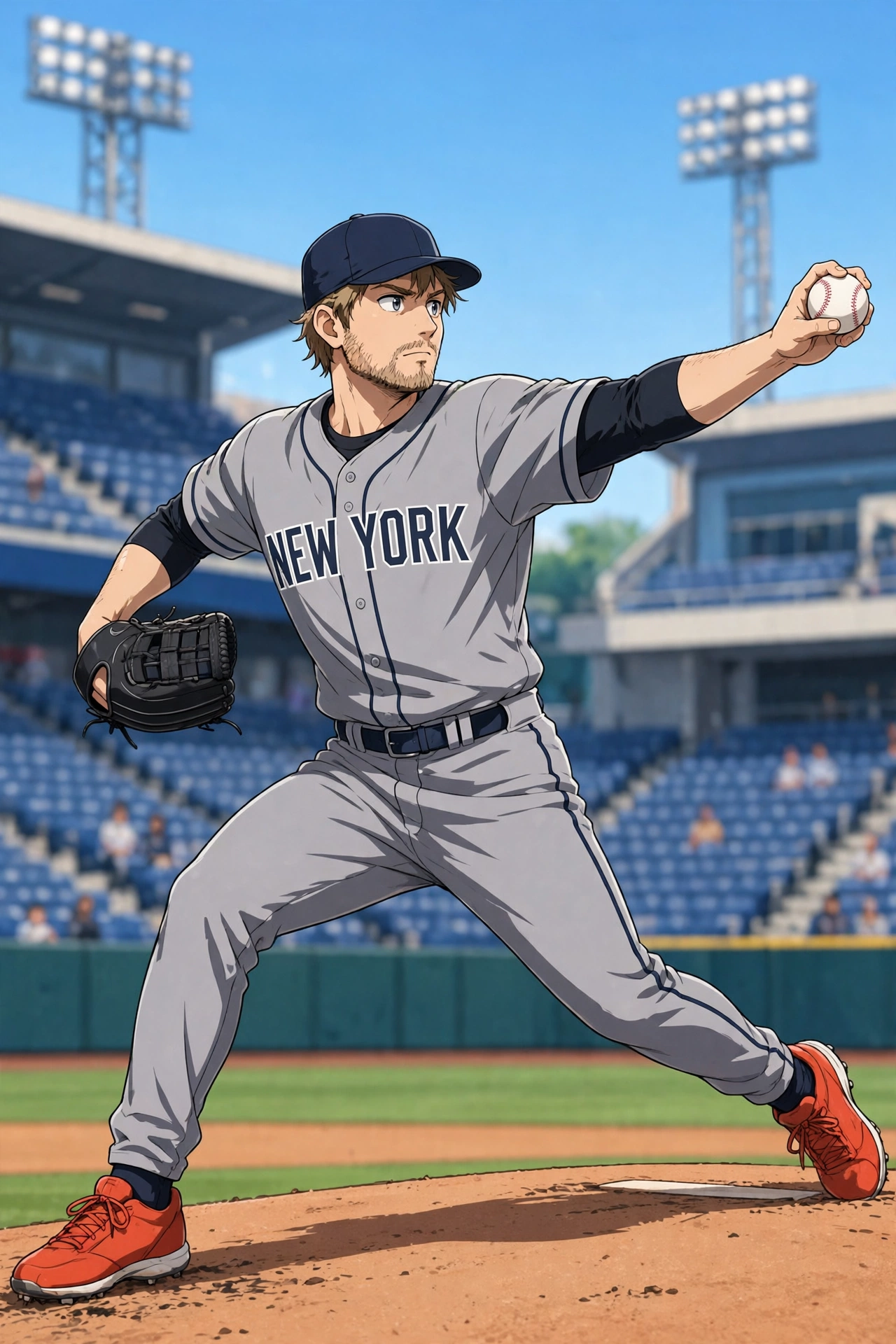
NEW YORK — The Mets have not announced it yet. On the reporting, the richest contract a pitcher has ever signed now belongs to Queens.
ESPN's Jeff Passan first reported Sunday that Tarik Skubal and the New York Mets are in agreement on a nine-year, $450 million contract. Jon Heyman reported the same terms, and Bob Nightengale reported the deal with full no-trade protection and no opt-outs. Will Sammon of The Athletic reported the structure behind the headline figure: no opt-outs, a $45 million signing bonus and full no-trade protection across the life of the deal, which runs through 2035 at $50 million a year. The club has not confirmed the agreement.
Start with what the number breaks. The previous record for a pitcher was Yoshinobu Yamamoto's 12-year, $325 million contract with the Dodgers. Skubal's deal clears it by more than a third, and his $50 million annual value is a record for the position as well. The Mets now hold both ends of baseball's pay scale: the largest contract ever given to a position player, Juan Soto's $765 million deal, and the largest ever given to a pitcher.
Skubal, who turned 30 on Friday, is not a projection. He is a ninth-round pick out of Seattle University in 2018 who spent seven years in Detroit and became, by the middle of this decade, the most decorated starter in the American League: back-to-back Cy Young Awards in 2024 and 2025, the first of them unanimous, a pitching Triple Crown in 2024 and two All-Star selections. Detroit never locked him up, traded him to Los Angeles at this past summer's deadline, and watched him go 12-7 with a 2.72 ERA across 26 starts for the Tigers and Dodgers in 2026.
The Dodgers, the Blue Jays and the Padres were the other clubs in the bidding, according to FOX Sports and ESPN. ESPN reported that Los Angeles wanted him back and was willing to go long term in the end, but never reached the point of a formal offer, with the uncertainty of a new collective bargaining agreement hanging over the decision. The current agreement expires December 1, and the timing of this deal is not a coincidence: Skubal's signature is on a contract priced under the economics that exist today, not whatever replaces them.
This is also a departure, and the reporting says so plainly. New York's baseball operation had avoided exactly this kind of commitment — a long-term, top-of-the-market deal for a free-agent starter in his early thirties. What changed is the rotation: as ESPN put it, the Mets have carried one of the game's most expensive payrolls and missed the postseason in consecutive years for want of a clear No. 1 starter. Now the top of the rotation at Citi Field, the club's Flushing home since 2009, reads Skubal and the promising young right-hander Nolan McLean, and the question that followed this team all winter has an answer.
The risk is written into the structure. Nine years, no opt-outs, full no-trade protection: there is no exit in this contract for the club, and a pitcher's arm is the least certain asset in the sport. The Mets know that and signed it anyway, ahead of a lockout deadline, at a price no pitcher has ever commanded. That is the story the number tells — not just that Skubal was the best arm on the market, but that New York decided being second in this auction, again, was the one outcome it would not accept.
From the eye: read the deal as two bets stacked together. The first is on Skubal himself — that a two-time Cy Young winner entering his age-30 season holds his form deep into a nine-year term. The second is on the calendar: with the labour deal expiring December 1, the Mets paid today's record price rather than bid for the same pitcher inside an economic system nobody can yet describe. If the new agreement squeezes top-end salaries, this contract will look prescient. If it doesn't, it will simply look like what it is — the day the price of an ace moved, and moved for good.